

AC installation in Austin is not just a box swap. A new condenser bolted onto a tired coil and leaky attic ducts will run up the same bills as the old one. This page walks through the decision in the order it really happens: whether to replace at all, how the system should be sized, what changed in the equipment since 2023, how the heat should be handled, and what a written AC replacement quote needs to say before you sign it.
Austin AC Service does not sell or install equipment. It is a free referral line. Dial (737) 378-9016 at any hour. An automated assistant collects your name, callback number, city or ZIP and a quick description, then hands the call to a locally owned, independent company carrying a TDLR air conditioning and refrigeration contractor license. The estimate, the installation and the bill all come from that company, not from the line.
Repair or replace: what actually decides it
Age alone is a poor reason to replace a running system. The better question is what failed, what the fix costs compared with a new system, and what the old one costs to run through an Austin summer. A capacitor or fan motor on a twelve-year-old unit is a normal repair. A burned-out compressor on the same unit, or a leaking indoor coil, is a different conversation, because those parts can approach the price of new equipment.
Refrigerant type matters too. R-22 has not been produced or imported in the U.S. since 2020, so keeping a leaking R-22 system charged gets more costly every year. An R-410A system is a different story: it can still be serviced, and nobody should tell you it must come out because of a federal deadline. That deadline was removed in 2026.
Ask any company that recommends replacement to price the repair as well. Seeing the two numbers side by side is the fairest way to decide.

Sizing the system: Manual J, S and D
The Air Conditioning Contractors of America publishes the three procedures that turn a house into a correct equipment size. Ask which of them the company used, and ask to see the numbers.
- Manual J, the load calculation. Room by room, it works out how much heat the house gains in summer and loses in winter from its walls, attic insulation, window area and orientation, air leakage and occupants. It also separates the sensible load (temperature) from the latent load (humidity), which matters in a city where muggy spring weather can feel worse than dry August heat.
- Manual S, picking the equipment. Manual J does not name a unit. Manual S uses the manufacturer's performance data to choose equipment that meets the calculated load at Austin design conditions, without large oversizing.
- Manual D, the ducts. It sizes the supply and return trunks, branches and registers so each room gets the air it needs. A new system on ducts that were never designed for it will be noisy, uneven or both.
Why bother? An oversized unit cools the air fast and shuts off before it has pulled out the moisture, so the house feels cold and clammy and the equipment wears out from constant starts. Square-footage rules of thumb are what lead there. Austin Energy's rebate rules make the same point: equipment has to be sized by an approved ACCA Manual J method or the utility's own sizing guidance to qualify.
What changed in new AC equipment
If your last system went in a decade ago, the equipment on the market today is different in four ways that show up on a quote.
- Efficiency minimums went up in 2023. Texas is in the Department of Energy's Southeast region. Since January 1, 2023, a split central air conditioner installed here must reach at least 14.3 SEER2 below 45,000 BTU per hour (under about 3.75 tons) and 13.8 SEER2 at that size and above. Split heat pumps must reach 14.3 SEER2 and 7.5 HSPF2 everywhere in the country. SEER2 and HSPF2 are newer test ratings, so a 14.3 SEER2 unit is roughly what used to be called 15 SEER.
- New refrigerants. Under the EPA's Technology Transitions rule, residential systems made from 2025 on use a refrigerant with a global warming potential under 700, in practice R-454B or R-32. Both are rated A2L, meaning mildly flammable, so the indoor units are built with refrigerant leak sensors that shut the system down and run the fan if a leak is detected. The EPA's 2026 rule change means pre-2025 R-410A equipment can still be installed, with no federal cutoff date.
- The coil has to match. An R-454B outdoor unit cannot run on an indoor coil designed for R-410A or R-22. Manufacturers require their approved coil or air handler, and the efficiency rating on the label only applies to the certified combination. Ask for the AHRI reference number, which lets you look the exact pair up in the public AHRI directory.
- No federal tax credit. The 25C credit, which paid up to $2,000 toward a qualifying heat pump, was repealed in July 2025 and does not apply to equipment placed in service after December 31, 2025.

The free refrigerant guide covers the R-410A to R-454B change in detail, including what it means if you are repairing rather than replacing.
Heat pump, or air conditioner with a gas furnace?
A replacement is the moment to decide how the house is heated. Austin averages only about a dozen nights a year at or below freezing, but storms like Uri in 2021 showed how cold it can get. Both setups below are common here.
| Question | Heat pump (with electric backup) | AC with gas furnace |
|---|---|---|
| How it heats | Runs the refrigeration cycle in reverse to move outdoor heat inside. Electric heat strips help in hard freezes. | Burns natural gas in the furnace; the AC only cools. |
| Mild winter days | Very efficient, and Austin has many of them. | Comfortable, warmer air from the vents. |
| Hard freezes | Capacity drops as it gets colder; backup strips draw a lot of power. | Full output regardless of outdoor temperature, as long as gas and power are on. |
| Needs a gas line | No | Yes, plus safe venting of combustion gases |
| Austin Energy rebates | Heat pumps are eligible when they meet the program's efficiency and sizing rules | Straight AC systems can qualify; systems with electric resistance heat do not |
There is a third option, often called dual fuel: a heat pump paired with a gas furnace that takes over in the coldest hours. ENERGY STAR notes it can make sense when a home already has a working gas furnace. If gas heat stays in the picture, keep a working carbon monoxide alarm near the bedrooms. Smell gas? Get out of the house first, then phone the gas utility or 911 from the yard or street. If a CO alarm sounds, get everyone out and call 911.
Permits, inspection and the ducts behind the walls
Inside Austin city limits, replacing a heating or cooling system is not on the City's list of work exempt from permits, so it needs a mechanical permit from Development Services and a city inspection when the job is done. The City's own mechanical permit request form asks whether the replacement is like for like. Suburban cities such as Round Rock, Georgetown, Pflugerville and Kyle have their own building departments, and homes in unincorporated parts of the counties follow different rules again. Pulling it is normally the installer's job. Get that written into the quote, and file the passed inspection with your house records. Buyers, inspectors and rebate programs may ask for it later.
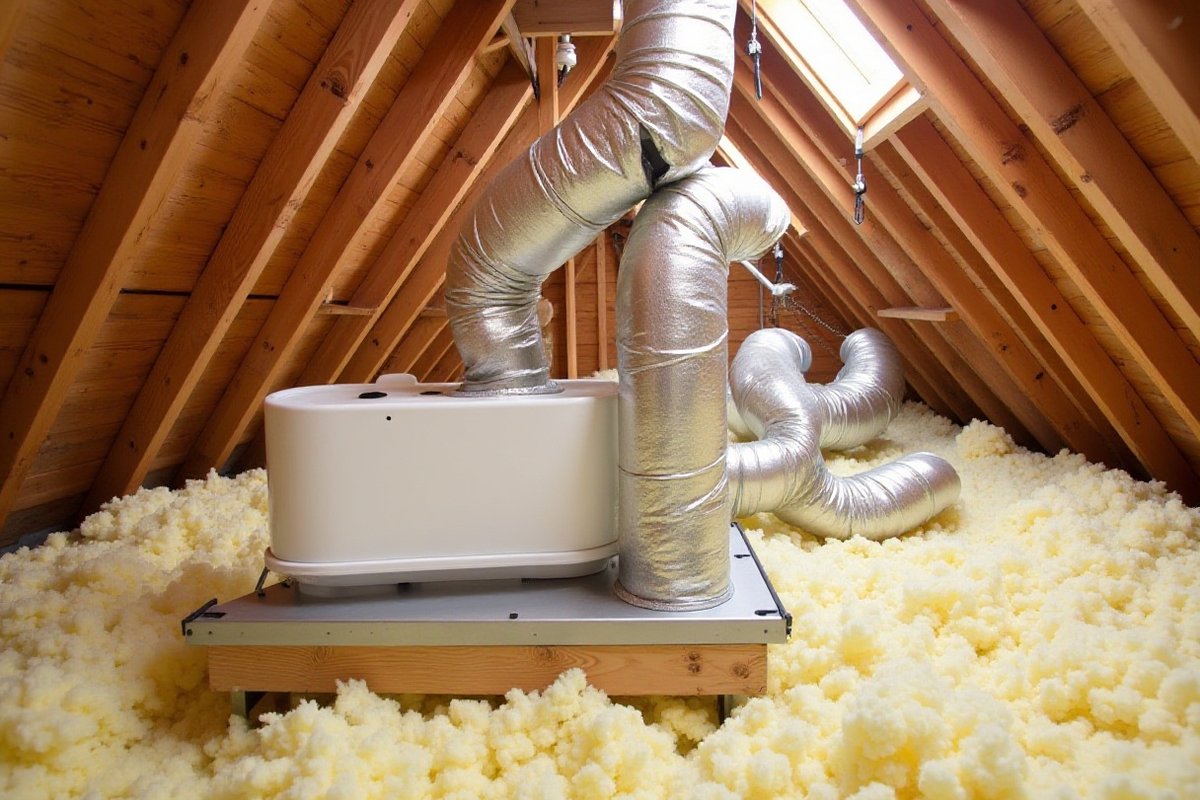
Then there are the ducts. A National Institute of Standards and Technology study of installation faults found that leaky ducts, the wrong refrigerant charge and poor airflow could raise a heat pump's energy use by up to 30 percent, with duct leakage the biggest single culprit. In an Austin attic in August, which runs far hotter than the air outside, every leak is pulling hot, dusty air in or blowing cold air into the insulation. Austin's energy code also sets duct leakage testing rules for some HVAC work, so ask whether your job triggers a test.
What happens on installation day
A careful install follows a sequence. Ask the company to walk you through it, and ask what it measures before it leaves.
- Recovery. The old refrigerant is recovered into a cylinder, never vented. That work requires EPA Section 608 certification.
- Equipment set. The outdoor unit goes on a level pad with service clearance; the matching coil or air handler goes in with a proper drain pan and, in an attic, a secondary pan or float switch.
- Line set. Copper lines are replaced or cleaned and confirmed compatible, brazed with nitrogen flowing through them, then pressure tested.
- Evacuation. A vacuum pump pulls the system down and a micron gauge confirms it holds, so no moisture or air is left inside.
- Charge and airflow. Refrigerant charge is set by the manufacturer's method and the blower speed is matched to the design airflow, which is what ACCA's quality installation standard checks.
- Paperwork. Thermostat set up, warranty registration explained, permit inspection scheduled.
The AC replacement quote checklist
Two quotes for "a 3-ton system" can describe very different jobs. Put this table next to every written quote you get. If a line is missing, ask for it before you sign.
| The quote should list | Why it matters | Warning sign |
|---|---|---|
| Full model numbers for the outdoor unit, coil or air handler, and furnace if any | Lets you confirm the efficiency rating and that the parts are a certified match | Only a brand name and a tonnage |
| AHRI reference number and SEER2 (and HSPF2 for heat pumps) | Proves the combination's rating and rebate eligibility | "About 16 SEER" with no reference number |
| How the size was chosen | Manual J and Manual S are the industry method; Austin Energy's rebate requires approved sizing | "Same as the old one" or "one ton per 500 square feet" |
| Refrigerant type and line set plan | Shows the coil matches and whether the copper is being replaced or reused | Silence on the coil or line set |
| Duct work included, if any | Sealing, repairs or replacement can matter more than the equipment | No mention of ducts in an attic install |
| Permit and inspection | Required inside Austin city limits and most nearby cities | "You don't need a permit for a swap" |
| Electrical, pad, drain and thermostat | Disconnects, breakers, drain pans and float switches are often where extra charges appear | "Extras as needed" |
| Labor warranty and parts warranty, in years | They are separate; manufacturer parts coverage often depends on registration | "Fully warrantied" with no terms |
| Rebate eligibility and who files it | Austin Energy rebates need a participating contractor and the right equipment | A rebate amount promised with no program named |
| TDLR contractor license number and total price | You can verify the license at tdlr.texas.gov; a single total avoids surprises | No license number on the paperwork |
The line does not give prices, and this page does not quote any. What moves the number is the equipment tier, whether the coil, line set and ducts are part of the job, how hard the space is to reach, the electrical work, and the permit. Comparing quotes line by line against this table is how you find out which one is really cheaper.
Austin Energy rebates and the 25C credit
If your electric bill comes from Austin Energy, its Power Saver program offers rebates on qualifying air conditioners and heat pumps. The rules matter more than the amount. The installer must be an Austin Energy participating contractor, the equipment has to meet the program's efficiency levels and sizing method, and air conditioners with electric resistance heat strips are excluded. The paperwork is filed after the install, so ask about it before you choose equipment, not afterward. Many homes in Round Rock, Cedar Park, Kyle, Buda, Dripping Springs and other nearby cities are served by another utility, such as Pedernales Electric Cooperative, Oncor or Bluebonnet Electric Cooperative; check your bill and ask that utility what it offers. The Austin Energy rebates guide has the details as currently published.
The federal 25C credit is gone for 2026 installs. If a sales pitch leans on it, the information is out of date.
Questions worth asking at the estimate
- Will you do a Manual J for my house, and can I keep a copy?
- Is a repair still an option, and what would it cost?
- Are the outdoor unit and indoor coil a matched, AHRI-listed pair for the same refrigerant?
- What will you check or fix in the ducts?
- Who pulls the permit, and who meets the inspector?
- Are you an Austin Energy participating contractor, and does this system qualify?
Ready for an estimate or a second opinion on one you already have? Call and say you are pricing a replacement. You will be put through to a licensed local company that serves your area.
- Call any hourAn automated assistant answers (737) 378-9016 and asks whether it is about cooling or heating.
- Describe the problemGive your name, a callback number, your city or ZIP and what the system is doing.
- Get put throughThe call goes to an independent, locally owned HVAC company, which hears a short summary before it picks up.
- Deal with them directlyThat company diagnoses, quotes, does the work and is paid by you. If it cannot answer, it gets your details to call back.
How this line works: Austin AC Service is a free phone line, not an HVAC company. It does not repair, install, quote or schedule work and holds no license. Calls are transferred to independent, locally owned HVAC companies that hold Texas air conditioning and refrigeration contractor licenses. Those companies may pay Austin AC Service a referral fee. You never pay the line. How it works.
Check any license yourself. Texas air conditioning and refrigeration contractors are licensed by the Texas Department of Licensing and Regulation. Ask for the license number and look it up at tdlr.texas.gov (opens in a new tab).
Related services and guides
AC Repair
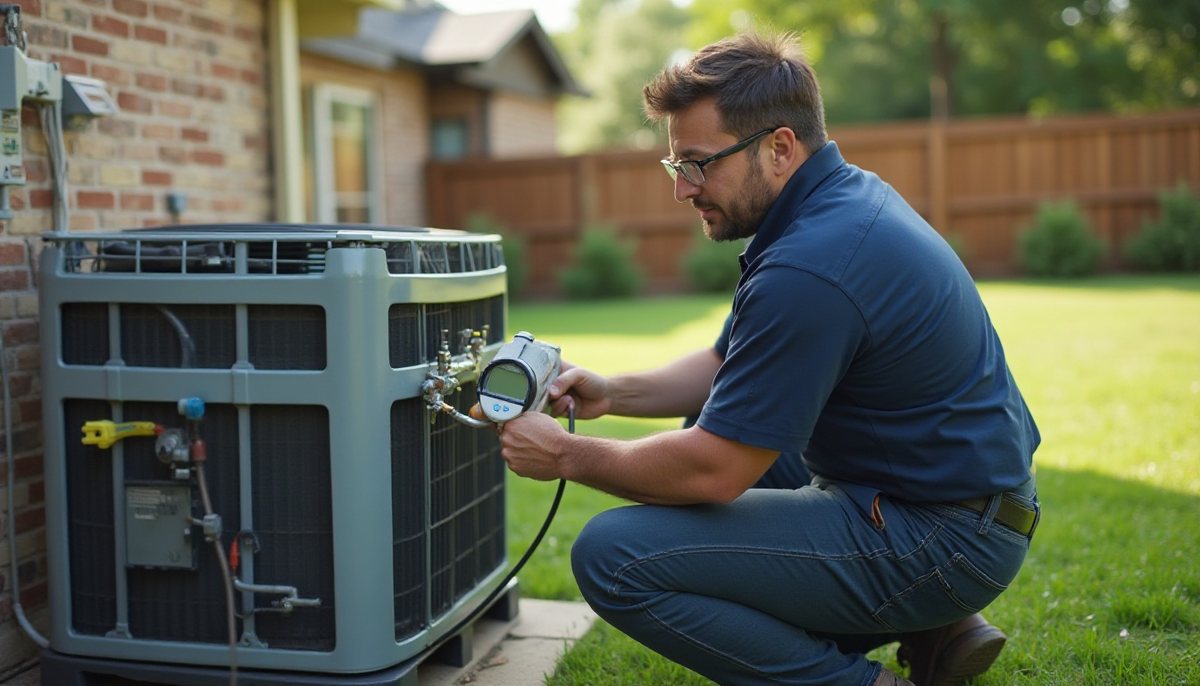
Warm air, a unit that hums but will not start, ice on the lines or water in the ceiling. What a proper diagnosis covers and what to ask before a repair.
Heating and Furnace Repair
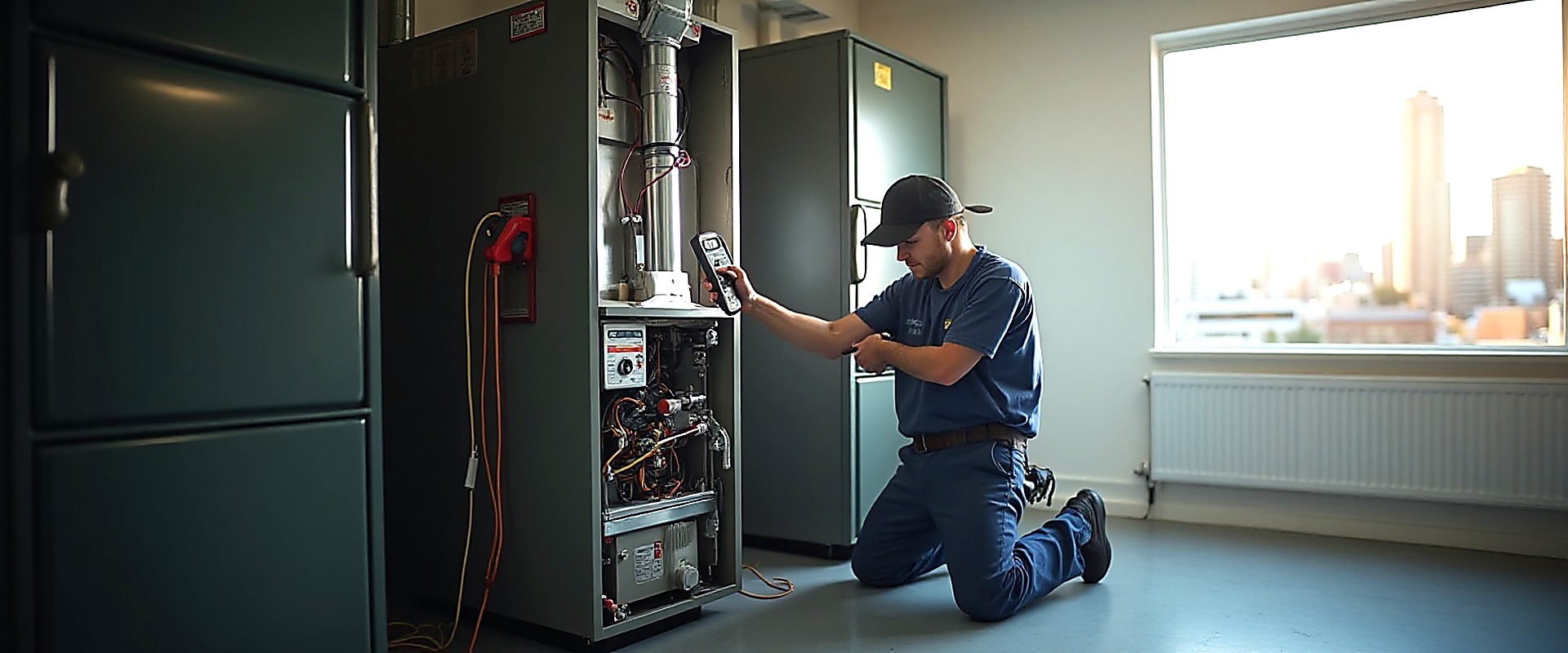
Gas furnaces, heat pumps and emergency heat. Why Austin heating systems fail on the first cold night and what a good technician checks.

HVAC Maintenance and Tune-Ups
A spring cooling check before the heat and a fall heating check before the first freeze, and what a real tune-up includes.
Austin Energy HVAC Rebates
Which heating and cooling upgrades Austin Energy customers can get rebates for, who qualifies, and how the rebate is claimed.
How to Choose an HVAC Company in Austin
Check the TDLR license, get the diagnosis and price in writing, and ask whether repair is an option before replacement.
Free Guide: The AC Refrigerant Change
R-410A to R-454B explained for homeowners. Download the free PDF guide, no sign-up.
AC replacement across the Austin area
Permits, utilities and housing stock differ from one city to the next. Each area page covers what is specific to that place.