
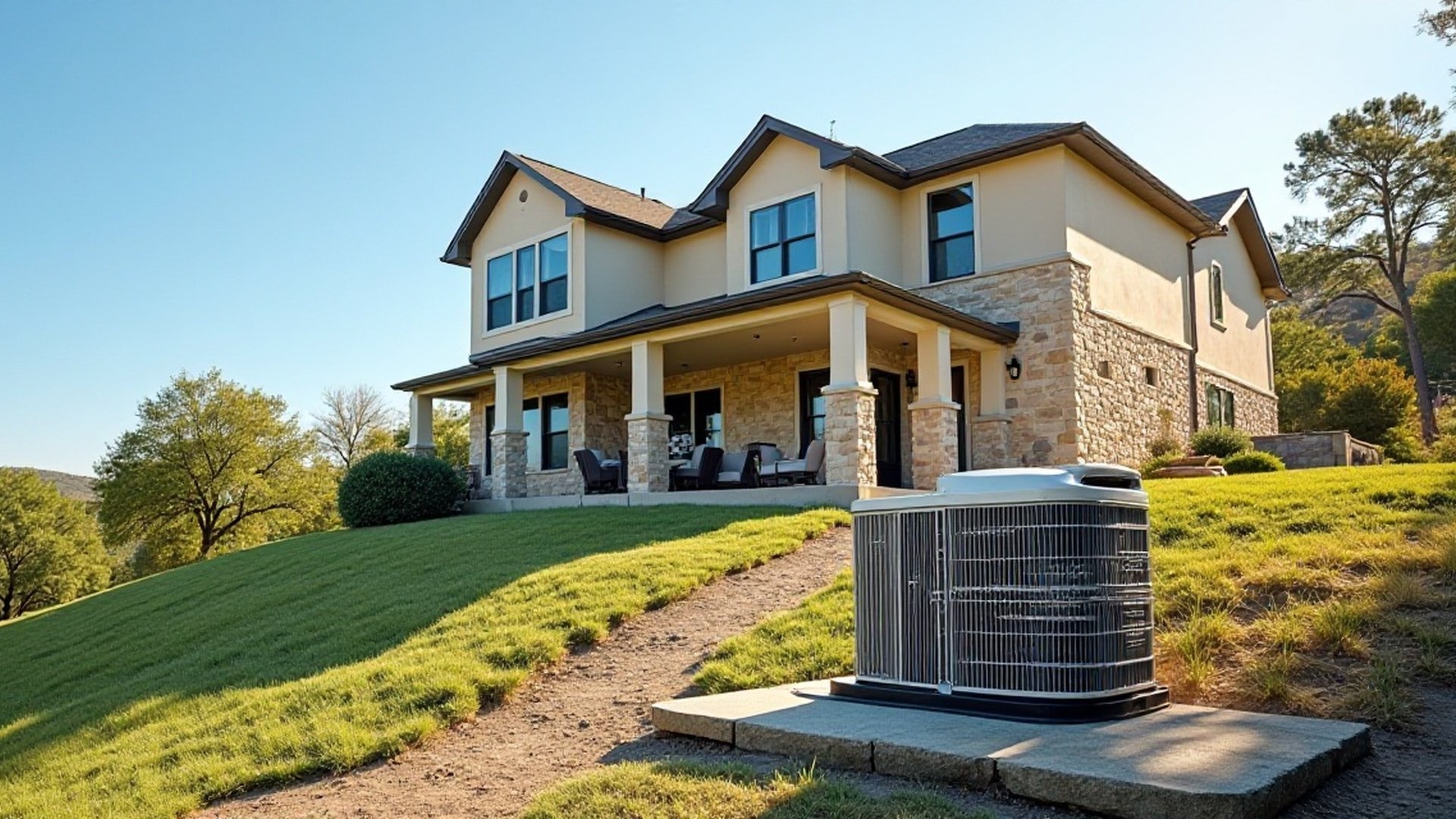
AC repair in Lakeway, TX means working on houses that do not look like the rest of the metro. The city climbs the limestone hills above Lake Travis, many homes are big and built into slopes, and a lot of them run two or three systems at once. When one of those systems stops keeping up in August, call the free line and you will be put through to a licensed local company that serves the Lake Travis side of Travis County.
Austin AC Service never comes to the house. It is a phone line and this website. An automated assistant answers (737) 378-9016 at any hour, asks whether the trouble is cooling or heating, takes your name, callback number, city or ZIP and a short description, then transfers you to an independent HVAC company. That company does the diagnosis, sets the price, does the work and bills you directly.
Lakeway homes and what they ask of an air conditioner
Lakeway started as a resort. According to the Texas State Historical Association, the land was optioned in 1962, lots went on sale in 1963 alongside the Lakeway Inn and marina, and residents voted to incorporate in 1974. Golf courses, cul-de-sacs on ridgelines and lake view lots followed. The census counted 11,391 people in 2010 and 19,189 in 2020, and later communities such as Rough Hollow, built around its own Lake Travis marina, pushed houses further up and down the hills.
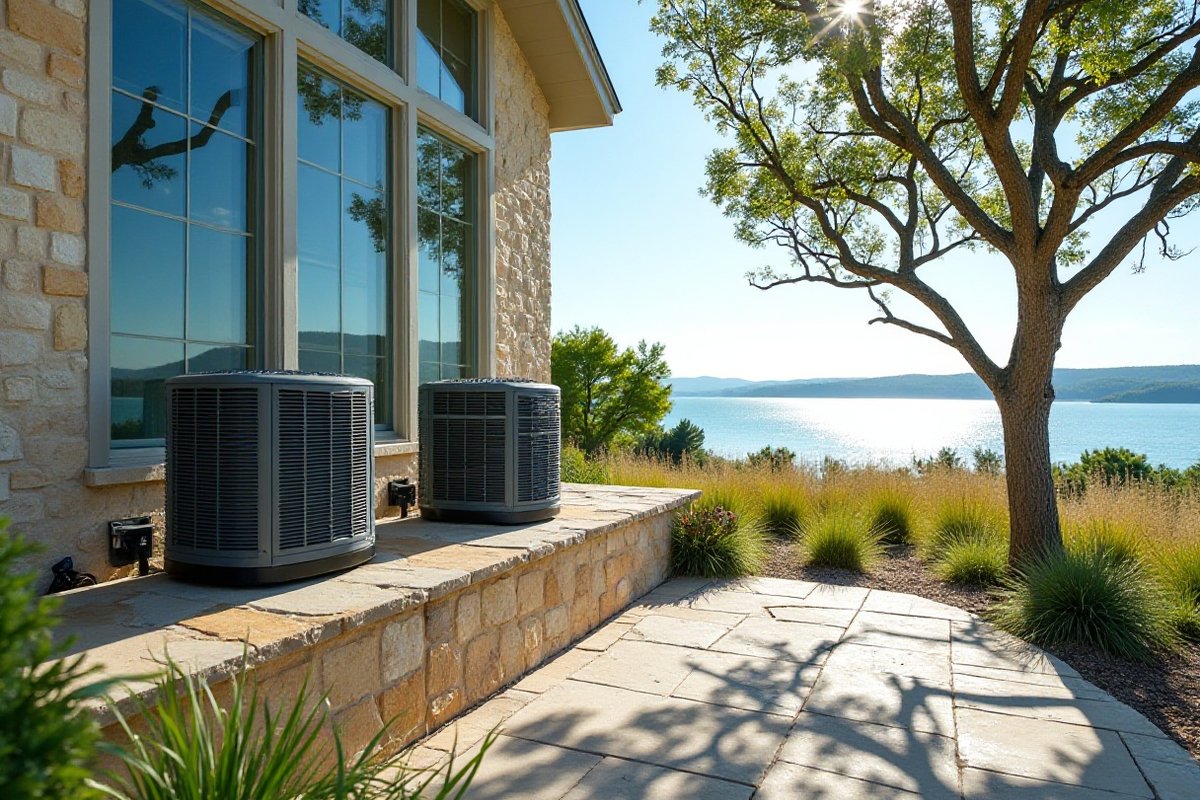
That mix gives HVAC companies two very different jobs in one city. Houses from the 1970s and 1980s near the original golf courses often carry ductwork and air handlers that have been patched more than once. Newer custom homes have tall ceilings, walls of glass pointed at the lake and long attic duct runs to far bedrooms. Both kinds tend to sit on sloped lots, so the outdoor unit may be on a terrace, a retaining wall ledge or a pad well below the house.
Which side of Hurst Creek are you on?
Lakeway is one of the few places in the Austin area split between two electric utilities, and the dividing line is a creek. The City of Lakeway describes it this way: homes south and east of Hurst Creek, as it runs through Lakeway and The Hills, are Austin Energy customers, and Pedernales Electric Cooperative serves everyone else. It changes what help is available when you replace a system.
Pedernales Electric Cooperative (PEC)
A member-owned cooperative headquartered in Johnson City and one of the largest distribution co-ops in the country. Austin Energy's Power Saver rebates do not apply to PEC members. If a contractor mentions an efficiency incentive, ask whether it actually comes from PEC and get the program name in writing.
Austin Energy
The City of Austin's own utility. Its rebates for qualifying heat pumps and air conditioners require an Austin Energy participating contractor and are applied for after the install. Austin's ECAD home energy audit rule, however, covers homes inside Austin city limits, so it does not follow a Lakeway house to closing.
Not sure? The utility name is printed at the top of your electric bill. The Austin Energy rebates guide explains how those programs work for homes that qualify.
Big houses, several systems, one hot bedroom
When a Lakeway caller says the AC is broken, the house often has a second system that is still running fine. That changes the questions worth asking. Two units rarely quit together, so the first job is to find out which system serves the rooms that are warm and whether that one is actually failing or just losing the fight against west sun on a wall of glass.
| What you notice | Often the cause | What a technician should look at |
|---|---|---|
| Upstairs is several degrees warmer than downstairs | One system serving two floors, attic heat on upstairs ducts, too little return air upstairs | Airflow per room, return paths, duct insulation and leakage in the attic |
| One zone never reaches its setting, the others do | A zone damper stuck closed or open, a zone thermostat fault, an undersized branch duct | Damper motors and control board, zone thermostat wiring, static pressure |
| Lake-facing rooms overheat in late afternoon | Solar gain through west glass that exceeds what that system was sized for | Load on that zone, shading, whether the duct to those rooms delivers its share |
| One of two outdoor units is silent | A tripped breaker for that unit, a failed part on that system only, a drain safety switch on its air handler | Each system tested on its own, starting with power and safety switches |
| Both systems run nonstop on a 100-degree day | Normal in extreme heat, or dirty coils and filters on both | Coil condition and filters on each, then temperature readings under load |
A careful company will not quote a larger replacement just because one room runs warm. Ask for the airflow and duct findings first. A zone damper, a crushed flex duct or a missing return is cheaper to fix than a new system, and a bigger unit can make humidity worse by cooling the air before it has run long enough to pull moisture out.
Smoke, cedar and the filter in a Lakeway house
Older parts of Lakeway are heavily treed, and the Lake Travis area has its own Community Wildfire Protection Plan through Lake Travis Fire Rescue alongside the City of Austin and Travis County plan. When smoke from a grass or brush fire drifts over the hills, your central system can help keep it out of the bedrooms, within limits.
- Use a better filter if the system can take it. The EPA points to MERV 13 or higher for wildfire smoke. Some older air handlers lose airflow with a dense filter, so ask the HVAC company before making it permanent.
- Close fresh air. If your system has an outside air intake or a fresh air setting, close it or set the system to recirculate while smoke is present.
- Run the fan. Setting the thermostat fan to On moves more air through the filter while the smoke lasts.
- Swap the filter afterward. A smoke event or a heavy cedar season in January can load a filter in weeks rather than months.
Permits and codes for HVAC work in Lakeway
Lakeway runs its own building department rather than relying on Travis County. Here is what the city has published.
- Who issues permitsThe City of Lakeway Building and Development Services department at 1102 Lohmans Crossing, which publishes a residential HVAC change out application and checklist.
- When a permit is neededReplacing an HVAC unit like for like, or installing all new ductwork, needs a permit. Replacing parts that belong to an existing system, such as blower motors, capacitors and fuses, generally does not.
- Codes in forceThe city adopted the 2021 International Residential Code and the 2021 International Energy Conservation Code, effective September 1, 2023. New ductwork and replacement equipment are inspected against those editions.
- Who pulls itThe installing contractor normally applies. Ask whether the permit and inspection fee are in the written quote.
Your HOA may also have rules about where a new outdoor unit can sit and how it is screened from the street or the golf course, so mention the HOA when you get a replacement quote.
Services Lakeway callers ask about most
Repairs come first in summer, but the shape of Lakeway housing makes a few other services more common here than in a starter subdivision.
AC Repair
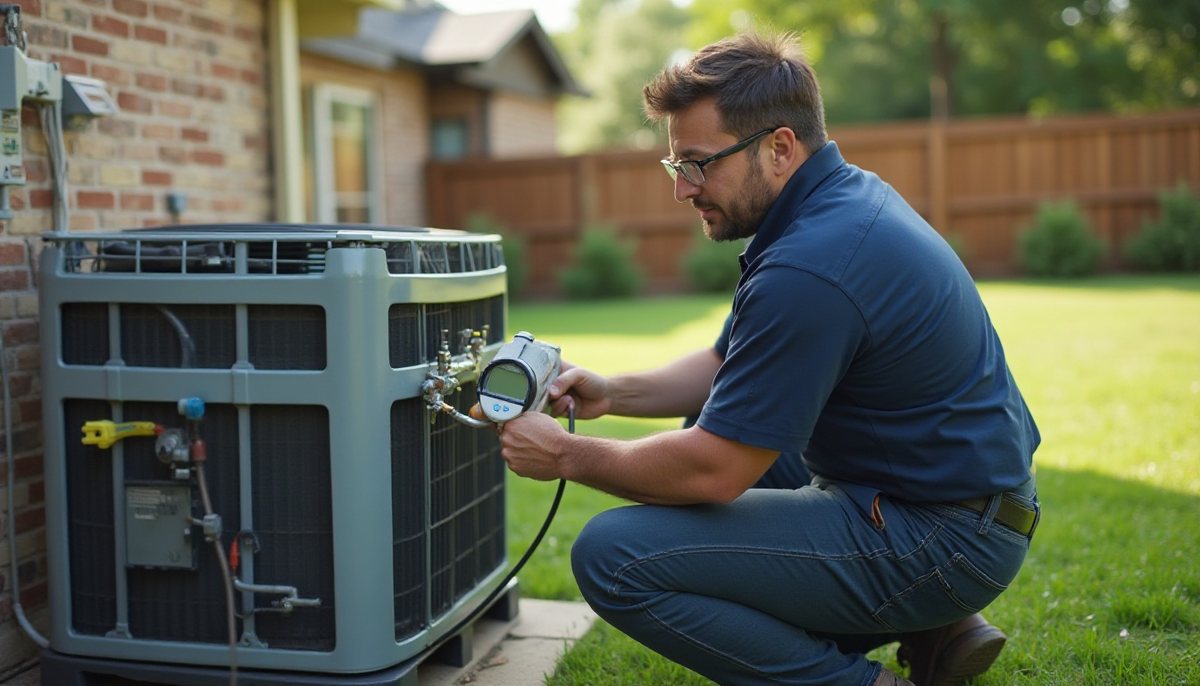
Warm air, a unit that hums but will not start, ice on the lines or water in the ceiling. What a proper diagnosis covers and what to ask before a repair.
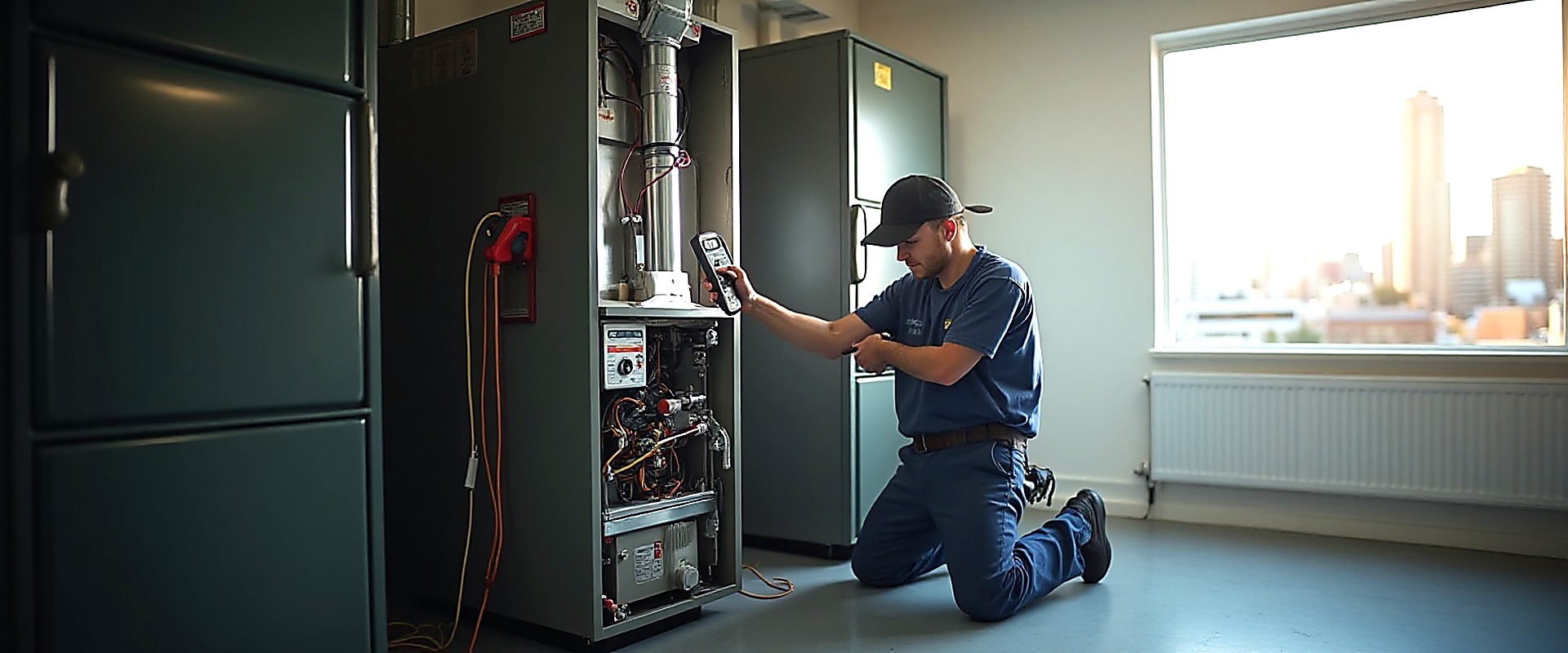
Heating and Furnace Repair
Gas furnaces, heat pumps and emergency heat. Why Austin heating systems fail on the first cold night and what a good technician checks.
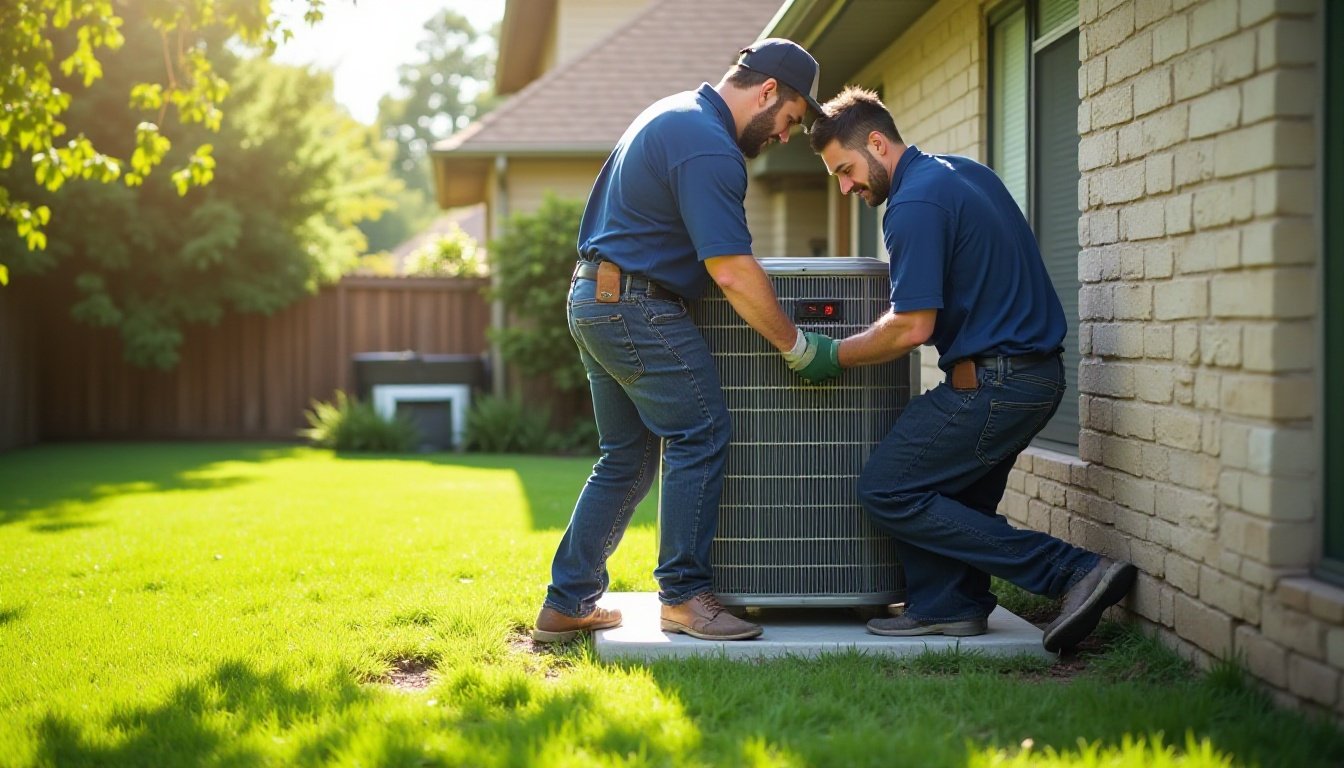
AC Installation and Replacement
Repair or replace, sizing by load calculation, the R-454B refrigerant change, permits, and Austin Energy rebates.
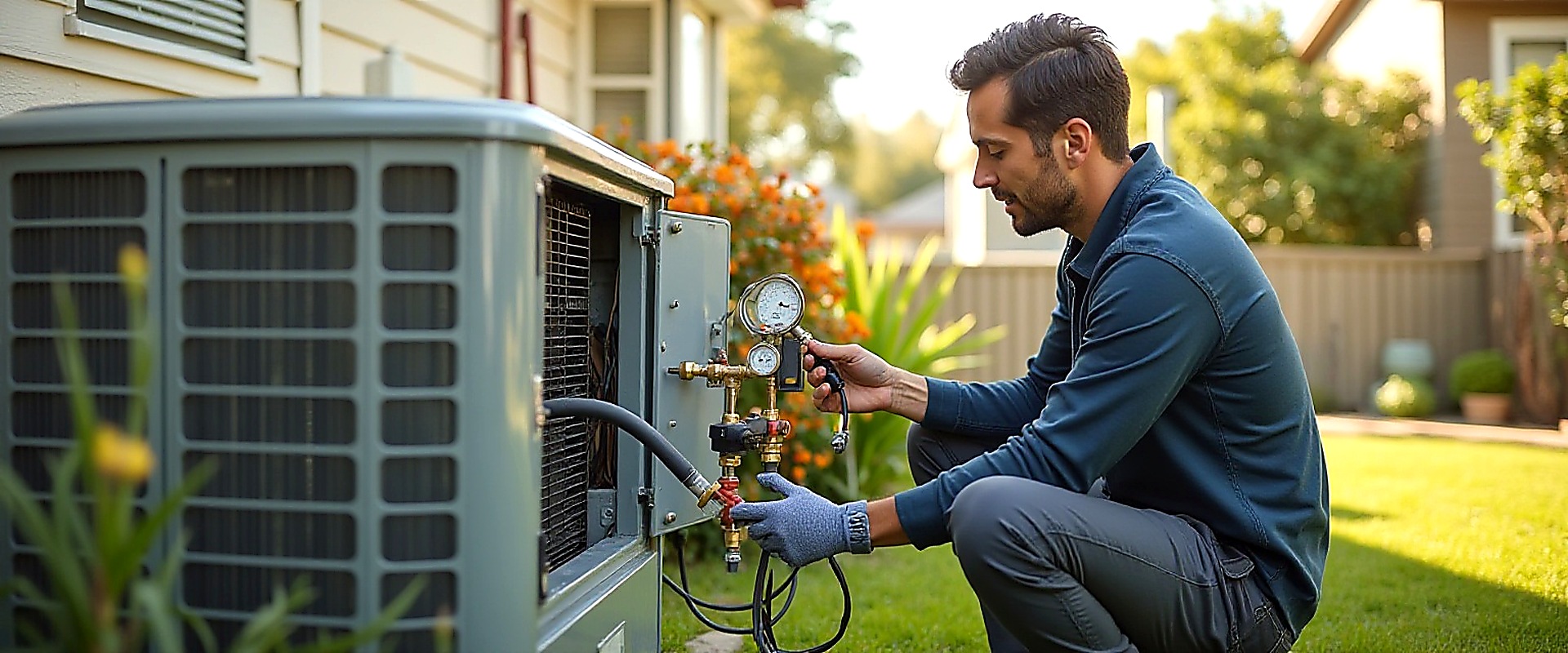
HVAC Maintenance and Tune-Ups
A spring cooling check before the heat and a fall heating check before the first freeze, and what a real tune-up includes.
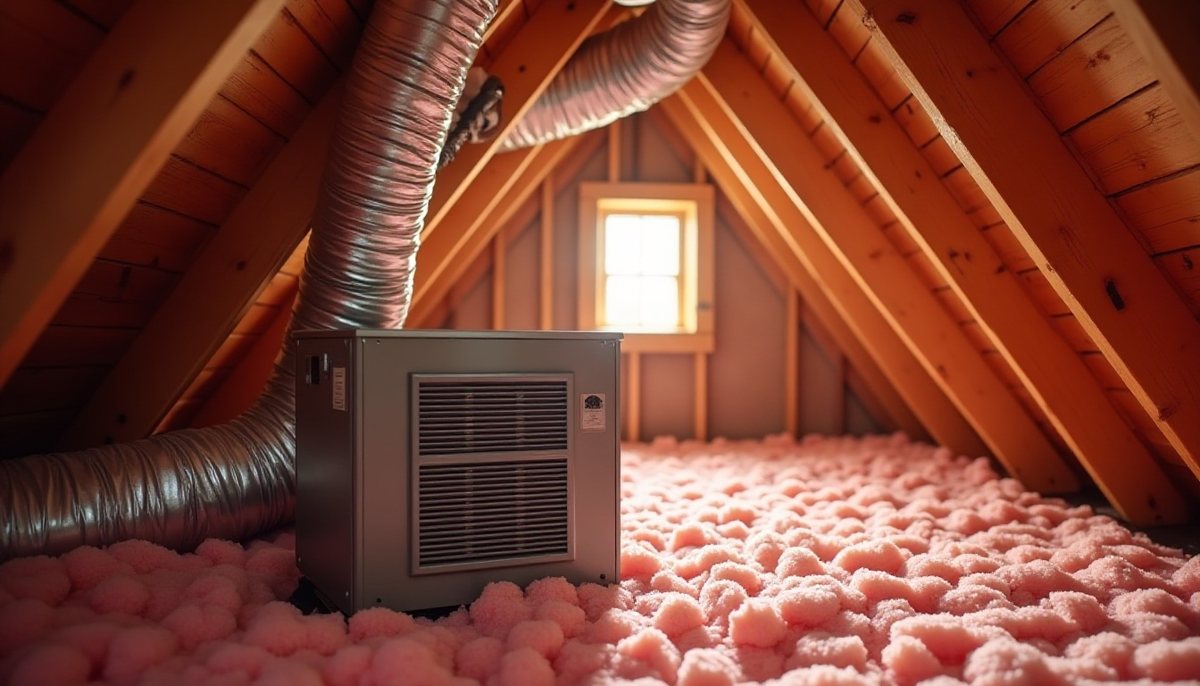
Air Duct Cleaning
When duct cleaning is worth paying for, what the EPA and NADCA say, and how to spot a too-good-to-be-true offer.
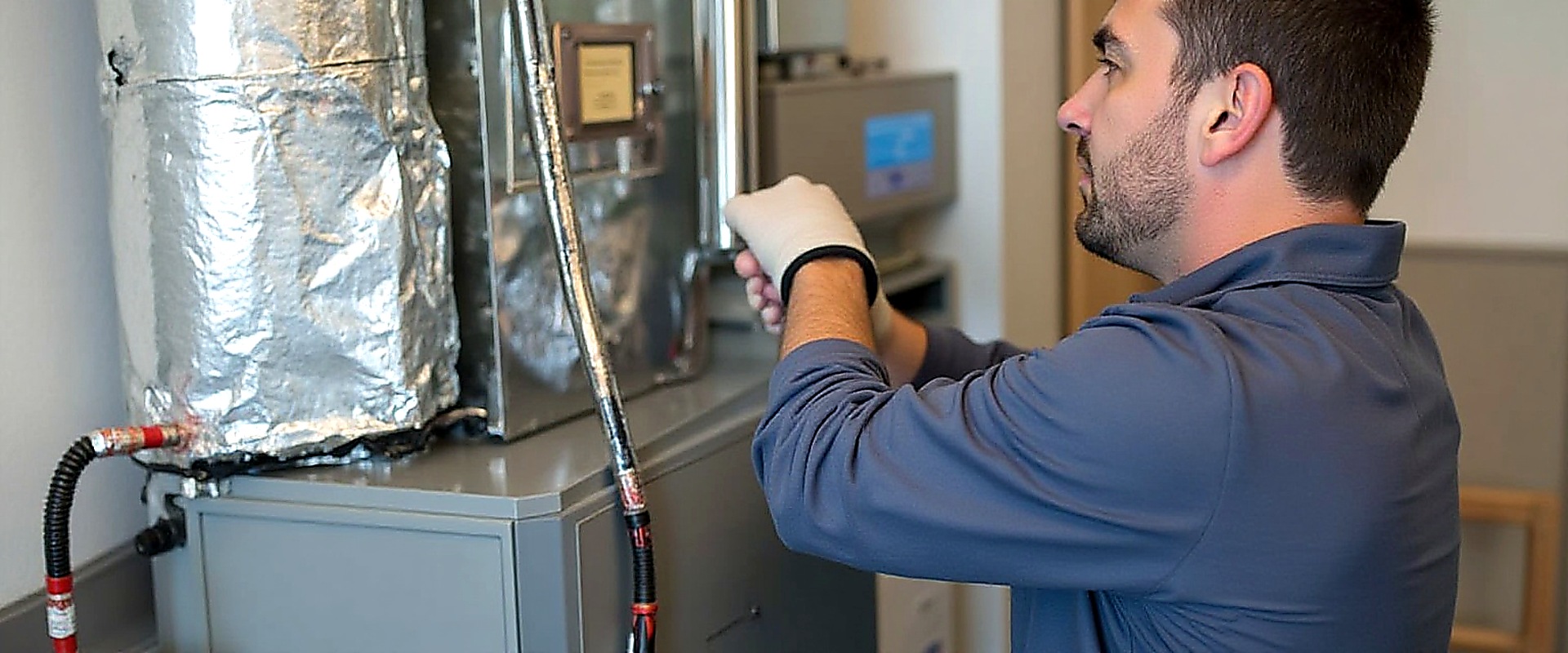
HVAC Inspection
Buying or selling a home, the Austin Energy ECAD audit, and what an HVAC inspection looks at that a general home inspection may not.
With two or three systems, a spring tune-up on each one before the heat arrives is worth more than in a single-system house. Older lake homes are where duct work and attic duct condition come up. And if you are buying a resale home on a hillside lot, an HVAC inspection before the option period ends tells you the age and condition of every system you are taking on.
Why Lakeway homeowners call the line
A company that works the lake side
You are put through to an independent, locally owned HVAC company that serves the Lake Travis area, rather than searching from a list at 10 at night while a bedroom climbs past 85.
Answered when the second system quits
The line is answered 24 hours a day by an automated assistant, so a failure on a holiday weekend at the lake still reaches a company or gets your details passed on for a call back.
Licensed, and you can check it
The companies on the other end of the line all carry an active TDLR air conditioning and refrigeration contractor license. Ask for the number and look it up free at tdlr.texas.gov.
The call costs nothing
Austin AC Service never charges callers. The company you speak with quotes its own price before it starts, and you decide whether to go ahead.
Heating in the hills: heat pumps, gas and propane
Lakeway is inside the Texas Gas Service Central Texas service area, so many homes heat with a natural gas furnace. Some neighborhoods, Rough Hollow among them according to the Railroad Commission's list of propane distribution systems, are served by a metered propane system instead, and plenty of homes use heat pumps with electric backup heat. Each fails in its own way, and the freeze of February 2021, when Austin stayed below freezing for six days, showed how hard a cold snap is on all of them. Have the heat checked in the fall, before the first hard freeze.
Gas or propane smell? Leave the house without switching anything on or off, then call your gas or propane supplier or 911 from outside. If a carbon monoxide alarm sounds, get everyone out and call 911. An HVAC company comes after the utility or fire department has made the house safe.
On the phone, say which system is the problem, whether it is upstairs or downstairs, whether the outdoor unit is running, and roughly how old the equipment is. Those four answers help the company you are put through to bring the right parts up the hill.
- Call any hourAn automated assistant answers (737) 378-9016 and asks whether it is about cooling or heating.
- Describe the problemGive your name, a callback number, your city or ZIP and what the system is doing.
- Get put throughThe call goes to an independent, locally owned HVAC company, which hears a short summary before it picks up.
- Deal with them directlyThat company diagnoses, quotes, does the work and is paid by you. If it cannot answer, it gets your details to call back.
How this line works: Austin AC Service is a free phone line, not an HVAC company. It does not repair, install, quote or schedule work and holds no license. Calls are transferred to independent, locally owned HVAC companies that hold Texas air conditioning and refrigeration contractor licenses. Those companies may pay Austin AC Service a referral fee. You never pay the line. How it works.
Check any license yourself. Texas air conditioning and refrigeration contractors are licensed by the Texas Department of Licensing and Regulation. Ask for the license number and look it up at tdlr.texas.gov (opens in a new tab).