

Knowing how to choose an HVAC company matters more in Austin than in most places, because the decision often gets made at the worst moment: a hot August evening, a dead system and someone at the door with a tablet. This guide gives you the checks to run before that happens, in the order that saves the most time.
It is written by a referral line, so here is the disclosure up front. Austin AC Service does not do HVAC work. It connects callers with independent, locally owned companies that hold active Texas air conditioning and refrigeration contractor licenses, and it may be paid a referral fee by them. Nothing on this page names or ranks any company. Use these checks on whoever you end up talking to, including a company you reach through the line.
Start with the license: a two-minute lookup
In Texas, heating and cooling work is regulated by the Texas Department of Licensing and Regulation, known as TDLR. A company that installs or repairs air conditioning has to work under a licensed air conditioning and refrigeration contractor, and the people it sends to your house must at least be registered as technicians with TDLR. Here is how to confirm the license.
- Get the number. Ask for the contractor license number. Texas contractor numbers start with TACLA (Class A, any system size) or TACLB (Class B, which covers up to 25 tons of cooling and essentially every house).
- Open the TDLR license search. Go to tdlr.texas.gov and choose the license search. Pick Air Conditioning and Refrigeration Contractor as the license type.
- Search by number, then by name. The number is more reliable. Searching by name as well shows whether the license really belongs to the business on your quote.
- Read the result. Look for an Active status and an expiration date in the future. Inactive, expired or suspended licenses do not authorize work.
- Check discipline. TDLR publishes enforcement actions against air conditioning contractors. A single old fine is not necessarily a deal breaker; a pattern is.
Check any license yourself. Texas air conditioning and refrigeration contractors are licensed by the Texas Department of Licensing and Regulation. Ask for the license number and look it up at tdlr.texas.gov (opens in a new tab).
Where the license number should already appear
You may not have to ask. Texas rules for air conditioning contracting companies, in 16 Texas Administrative Code section 75.71, require the license number in plain view in several places. If it is missing everywhere, that tells you something.
- On the trucks. The company name and its licensee's number in letters at least two inches high on both sides of every vehicle used for the work.
- In advertising. Ads soliciting air conditioning work must include the license number. Nationally placed television ads are the exception.
- On proposals and invoices. The company name, address and phone number and the licensee's number on every proposal and invoice.
- A consumer notice. A statement that the company is regulated by TDLR, with TDLR's address, phone number and website, on proposals, invoices and written contracts.
Insurance: ask for the certificate, not the word
TDLR requires licensed contractors to carry general liability insurance, with a minimum of $100,000 per occurrence and $200,000 aggregate for Class B and $300,000 and $600,000 for Class A. That is a floor, and it does not cover everything.
Ask for a certificate of insurance before a crew climbs into your attic or sets a condenser with a crane. The certificate names the insurer, the policy dates and the limits, and you can call the insurer to confirm it is current. If a company has employees, it is reasonable to ask how it covers injuries on the job, because a worker hurt on your property raises questions you would rather not answer later.

The written diagnosis and price come first
A careful company tells you what failed and what it will cost before it picks up a tool. For a repair, that means the specific part named (a capacitor is not a compressor), the labor, any refrigerant with the amount in pounds, and a total. If there is a diagnostic fee, ask what it is up front and whether it is credited toward the repair.
Then ask the question many homeowners skip: is repair an option here? If the company recommends replacement, it should be able to say why repair does not make sense, with the repair price next to the replacement price. A straight answer is one of the strongest signals you will get about a company. A refusal to price the repair is a signal too.
For a replacement: permit and Manual J
Inside Austin city limits, replacing a heating or cooling system requires a mechanical permit and a city inspection, and the suburbs have their own building departments with similar rules. The installing contractor normally pulls the permit. Ask whether it is included in the price and who is on the hook if the inspection fails. A company that offers a discount for skipping the permit is offering to skip the one independent check on its work.
Sizing is the other half. The residential code that Texas cities build on says heating and cooling equipment must be sized from the house's actual loads, using ACCA Manual J for the load and Manual S for picking equipment. In practice a Manual J looks at insulation, windows and which way they face, air leakage, duct location and Austin's design temperatures, room by room. Matching the tonnage of the old unit or using a square-foot rule of thumb skips all of that. Oversized systems cool fast, shut off, and leave the house cool but clammy, which is a common complaint in Central Texas humidity.
Ask for the load calculation, and ask to see the result next to the size being proposed. If the quoted system is much bigger than the calculation calls for, the company should be able to explain why.

Red flags worth walking away from
The deadline scare
"R-410A is banned, so you have to replace now." Not true. New systems built since January 1, 2025 use lower-impact refrigerants such as R-454B, but repairs and recharges on R-410A systems are allowed, and the EPA removed the January 2026 installation deadline in 2026. A company still using that line is either behind or counting on you being behind.
Top-off without a leak search
An air conditioner does not use up refrigerant. If it is low, it is leaking. Adding refrigerant every summer without looking for the leak means paying for the same visit again, at rising prices. Ask where the leak is and whether it can be repaired.
Today-only pricing
A price that expires when the salesperson leaves is a pressure tactic. Honest pricing survives a night's sleep and a second opinion.
A size quoted over the phone
Nobody can size a system without seeing the house. A firm tonnage or system price before anyone has walked through your home means the Manual J is not going to happen.
No license number anywhere
Not on the truck, the website, the proposal or the invoice. Texas rules require it in all of those places. Reluctance to give it when asked ends the conversation.
A bid far below the rest
Usually something is missing: the permit, a matched indoor coil, line set replacement, haul-away, or a labor warranty. Compare model numbers and inclusions line by line before celebrating.
Reading reviews without being fooled by them
Star averages are the least useful part of a review profile. A few habits get more out of them:
- Sort by newest. Companies change owners and staff. What happened four years ago matters less than last month.
- Read the three-star reviews. They tend to describe what actually happened, without the anger or the gushing.
- Look for specifics. "Explained the repair and gave me the price first" tells you more than "great service!"
- Watch how the company replies to complaints. A calm, specific answer to a bad review is a good sign. Silence or a fight is not.
- Notice bursts. A pile of short, glowing reviews posted in the same week is worth a second look.
- Match the job. Praise for a fast capacitor swap does not tell you how a company handles a full replacement with ductwork.
Reviews describe how a company treats people. The license, the permit and the written quote describe how it does the work. You need both.
The question checklist
Print this page or screenshot this section and keep it by the phone. Ask every company the same questions so the answers are comparable.
On the phone
- What is your TDLR contractor license number?
- Is there a diagnostic or trip fee, and how much?
- Is it credited to the repair if I go ahead?
- Are after-hours rates different, and by how much?
After the diagnosis
- Which part failed, and how did you confirm it?
- Can I have the diagnosis and price in writing?
- Is repair an option, and what does it cost?
- If refrigerant is low, where is the leak?
- What warranty covers the part and the labor?
For a replacement
- Will you do a Manual J in the house, and can I see it?
- What are the indoor and outdoor model numbers?
- Is the permit included, and who books the inspection?
- Can I see your certificate of insurance?
- Is the labor warranty in writing, and for how long?
- Does this qualify for my utility's rebate, and who files it?
If something goes wrong: the TDLR complaint process
Most disputes start with a phone call to the company's owner or service manager, with your quote and invoice in hand. If that does not resolve it and you believe the work broke the rules, such as unlicensed work, no permit, or work that does not meet code, TDLR takes complaints.
- Gather the paperwork. The quote, invoice, license number, photos, texts and dates. TDLR says a complaint without enough information may not be opened for investigation.
- File it. Online at tdlr.texas.gov/complaints is fastest. Email and mail are also accepted, and TDLR's customer service line at 1-800-803-9202 can help with the form.
- Mind the clock. TDLR states that complaints must generally be filed within two years of the event.
- Separate the money question. TDLR can discipline a license holder. Getting money back is a separate matter, often for justice court or a lawyer.
The short version
Verify the license, get the diagnosis and the price in writing, ask whether repair is an option, insist on a permit and a load calculation for any replacement, and slow down whenever the urgency comes from the salesperson rather than the equipment. The free refrigerant guide goes deeper on reading replacement quotes, and the Austin Energy rebates guide covers the participating contractor rule if you are on Austin Energy.
- Call any hourAn automated assistant answers (737) 378-9016 and asks whether it is about cooling or heating.
- Describe the problemGive your name, a callback number, your city or ZIP and what the system is doing.
- Get put throughThe call goes to an independent, locally owned HVAC company, which hears a short summary before it picks up.
- Deal with them directlyThat company diagnoses, quotes, does the work and is paid by you. If it cannot answer, it gets your details to call back.
How this line works: Austin AC Service is a free phone line, not an HVAC company. It does not repair, install, quote or schedule work and holds no license. Calls are transferred to independent, locally owned HVAC companies that hold Texas air conditioning and refrigeration contractor licenses. Those companies may pay Austin AC Service a referral fee. You never pay the line. How it works.
Related services
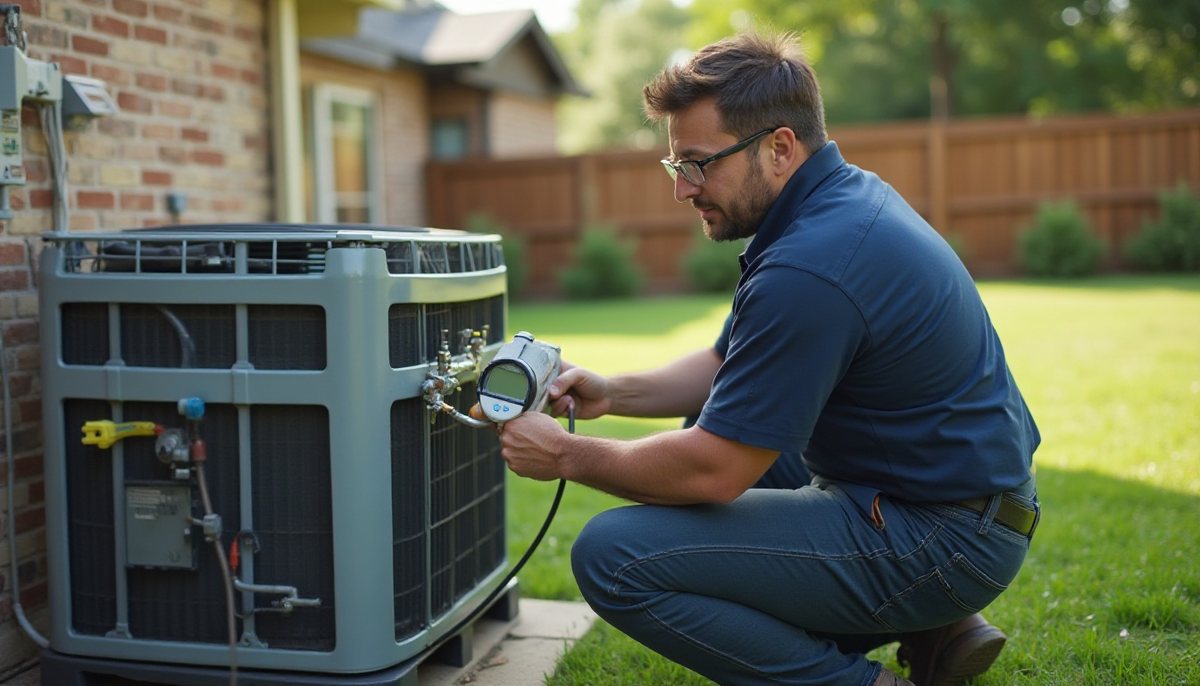
AC Repair
Warm air, a unit that hums but will not start, ice on the lines or water in the ceiling. What a proper diagnosis covers and what to ask before a repair.
AC Installation and Replacement
Repair or replace, sizing by load calculation, the R-454B refrigerant change, permits, and Austin Energy rebates.
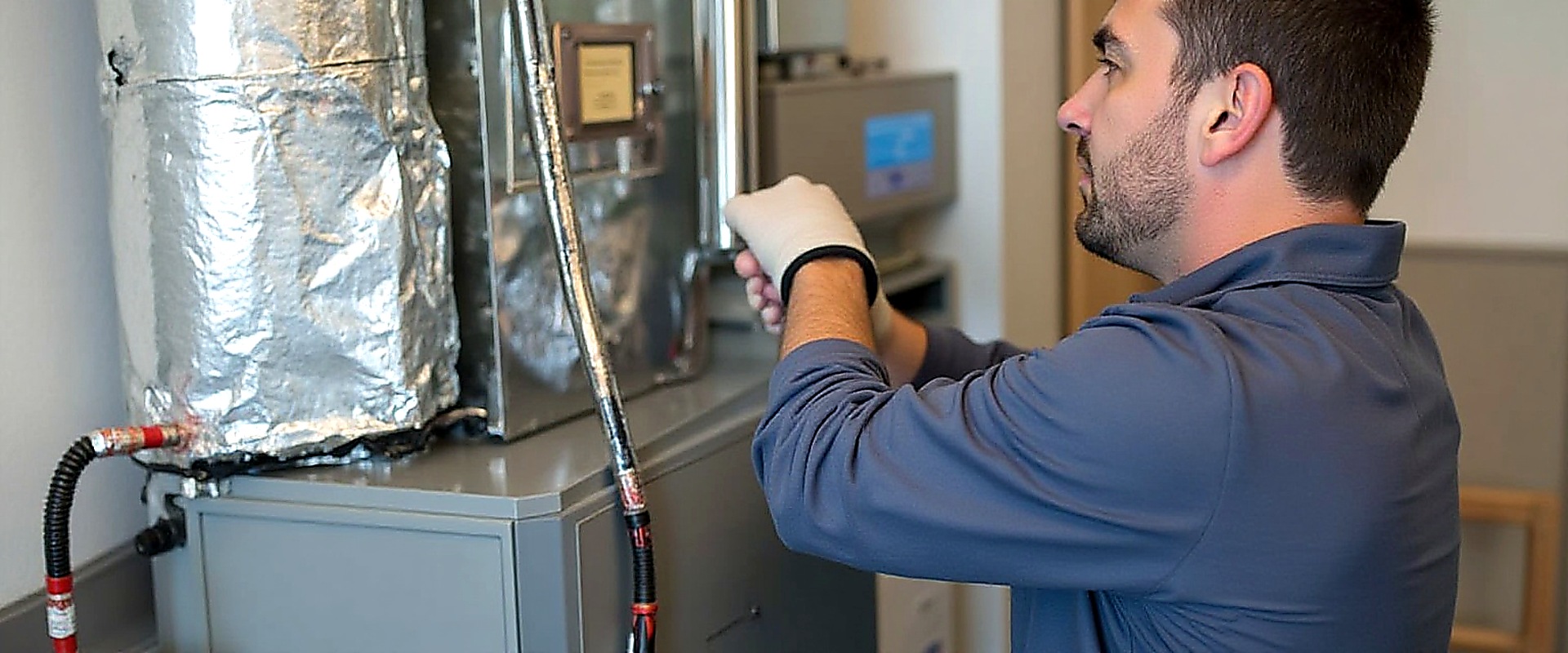
HVAC Inspection
Buying or selling a home, the Austin Energy ECAD audit, and what an HVAC inspection looks at that a general home inspection may not.
Finding a licensed company near you
Callers from across Travis, Williamson and Hays counties use the line. Pick your city for its utility, permit office and housing details.