
Commercial HVAC in Austin is less about comfort and more about keeping the doors open. When the cooling quits in a restaurant at 5 p.m. in August, or a network closet climbs past 85 degrees, the cost is lost sales, spoiled product and equipment damage, not a sticky night's sleep. This page covers the equipment most Austin businesses run, what tends to go wrong in different kinds of buildings, the licensing, permit and rebate rules that apply to commercial work, and what a building owner or manager should ask before approving a repair.
Nobody from Austin AC Service climbs onto your roof. The number, (737) 378-9016, is a free referral line answered around the clock by an automated assistant. Say the building is commercial, then give a name, a number for the callback, the ZIP code and a short description of the problem. You are handed off to an independent HVAC business, locally owned and TDLR licensed, that covers your side of the metro. It sends the technician, writes the quote and invoices your business.
The equipment on most Austin commercial roofs
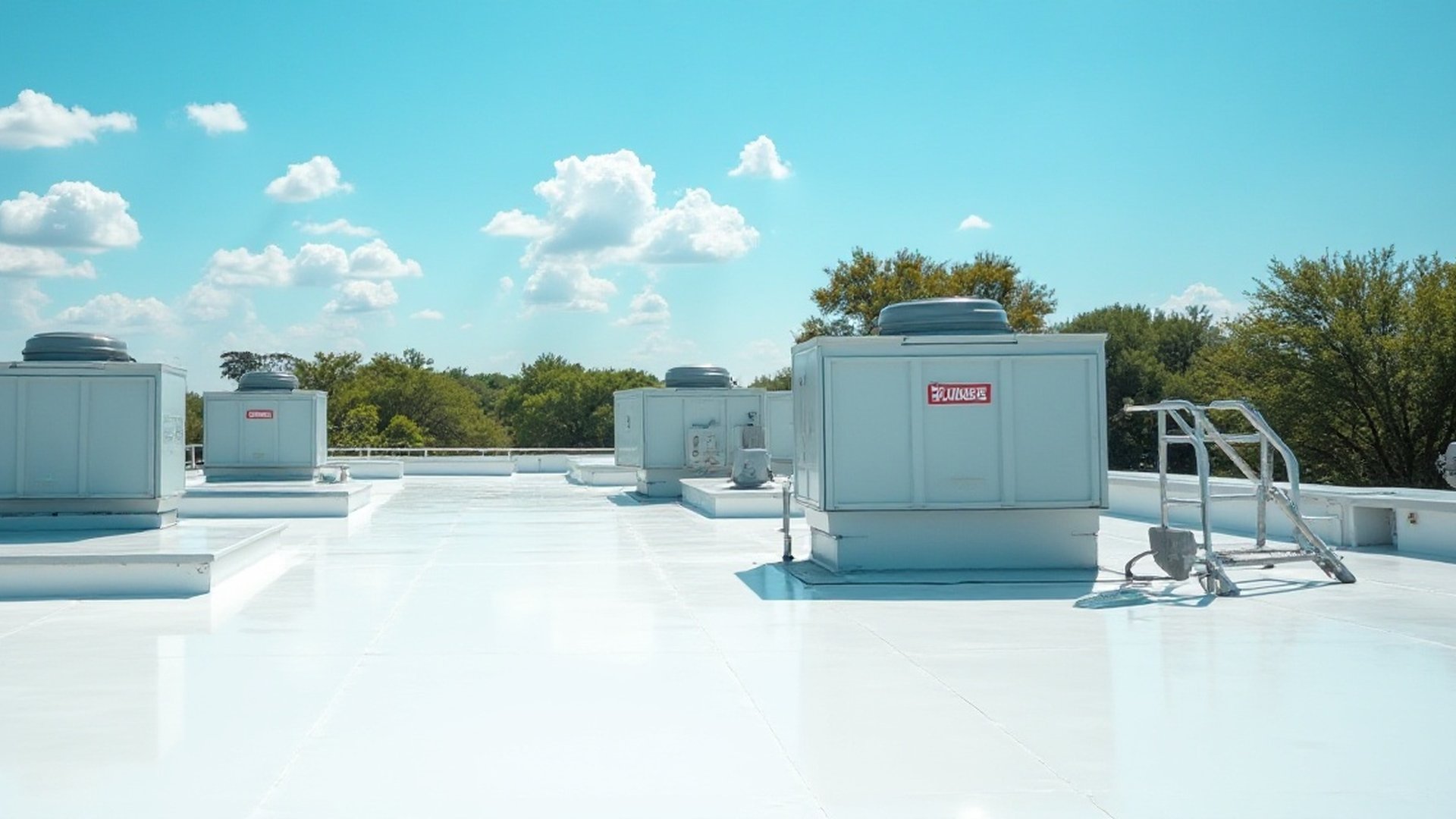
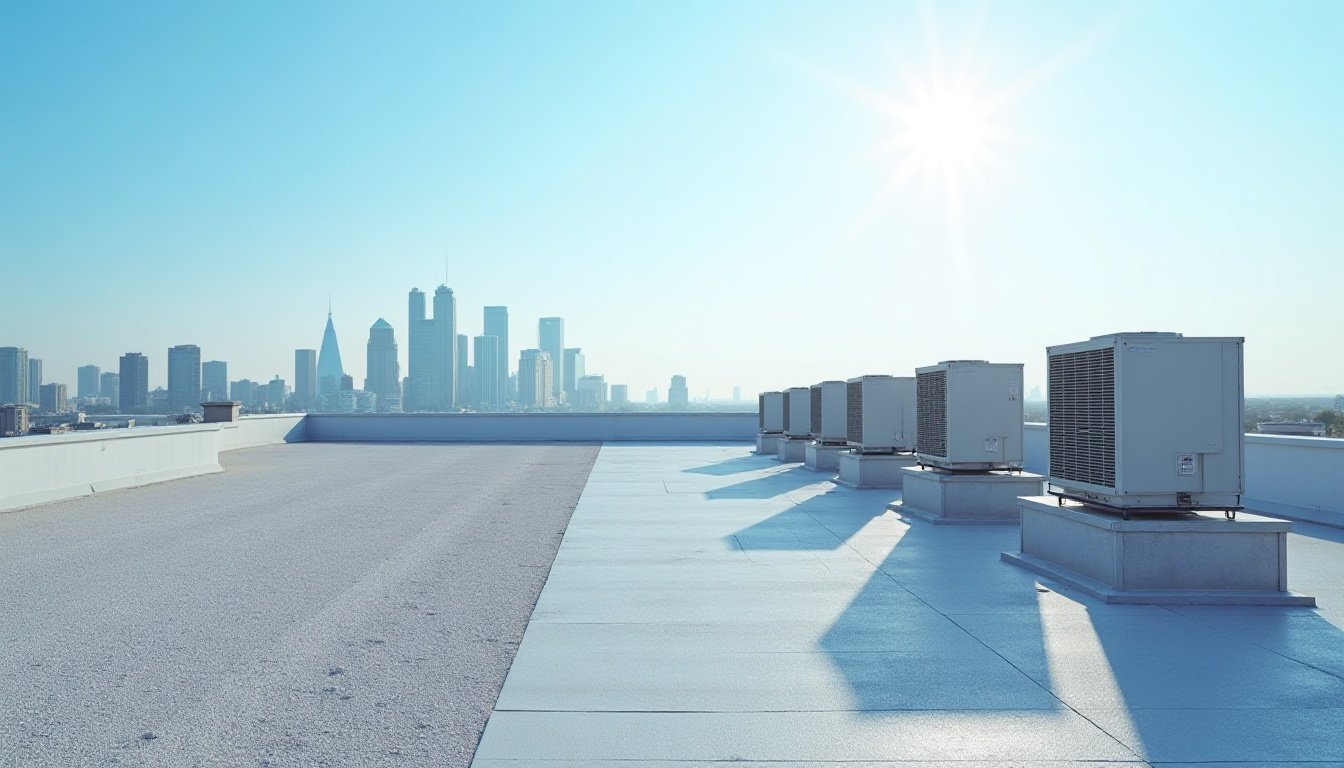
Walk onto almost any strip-center or office roof in the Austin area and you will find packaged rooftop units, often called RTUs: a single cabinet that holds the compressor, both coils, the blower and, on many, a gas heat section. Smaller offices and storefronts sometimes run split systems like a house, with a condenser on a pad or the roof and an air handler above the ceiling. Server rooms and add-on spaces often get ductless mini-splits. Larger buildings move up to chilled water or variable refrigerant flow systems, which are a separate class of work.
Rooftop units have their own weak points. Belts on older blower motors stretch and snap. Economizer dampers, which bring in outside air when it is cool enough, stick open and pour humid air into the building in summer. Condenser coils on a roof collect dust from nearby construction and cottonwood seed in spring.
What goes wrong, building by building
The equipment may be similar, but the way a building is used decides which failure hurts most. Tell the line what kind of property it is so the company you reach can come prepared.
Restaurants and commercial kitchens
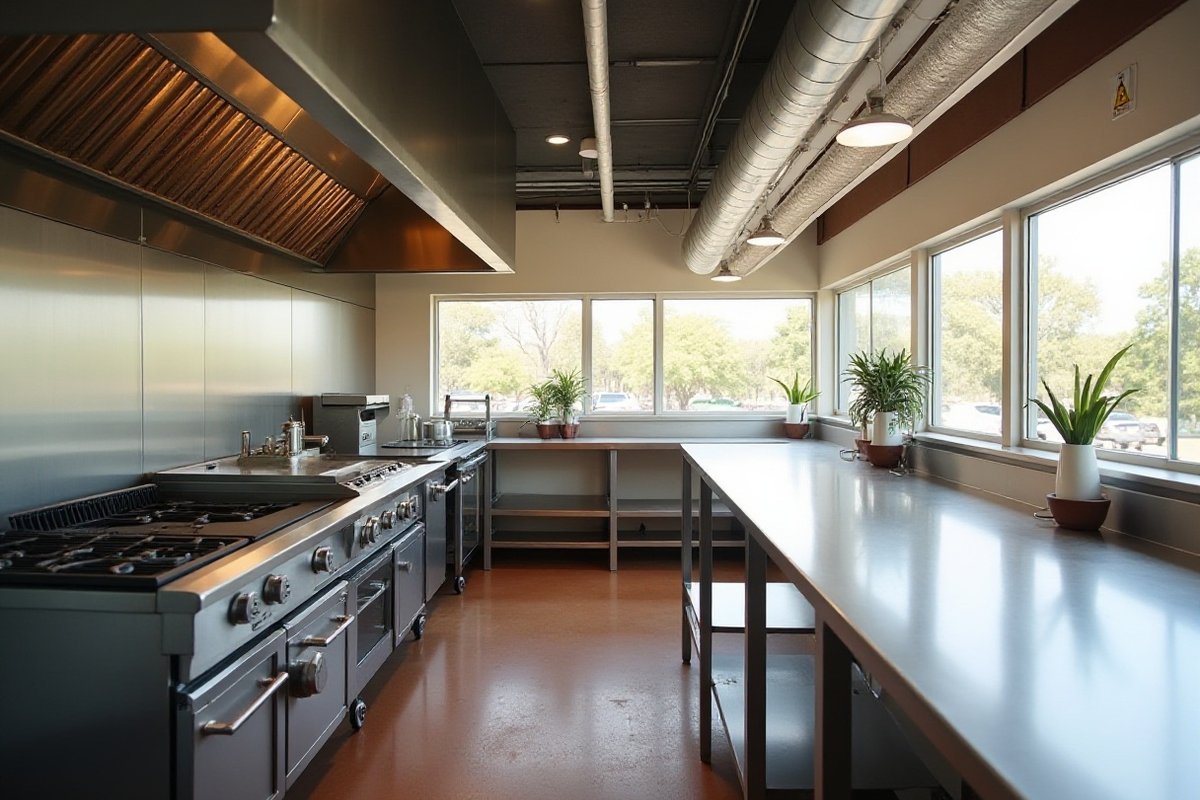
The kitchen hood pulls a large volume of air out of the building. The mechanical code calls for makeup air roughly equal to what all the exhaust fans remove, supplied whenever the hood runs. When a makeup air unit fails or its filters clog, the building goes negative: doors are hard to open, the dining room pulls in hot outside air and the rooftop units cannot keep up. Grease also coats nearby coils and filters fast. Ask the technician to look at the hood, the makeup air and the cooling together.
Server rooms and IT closets
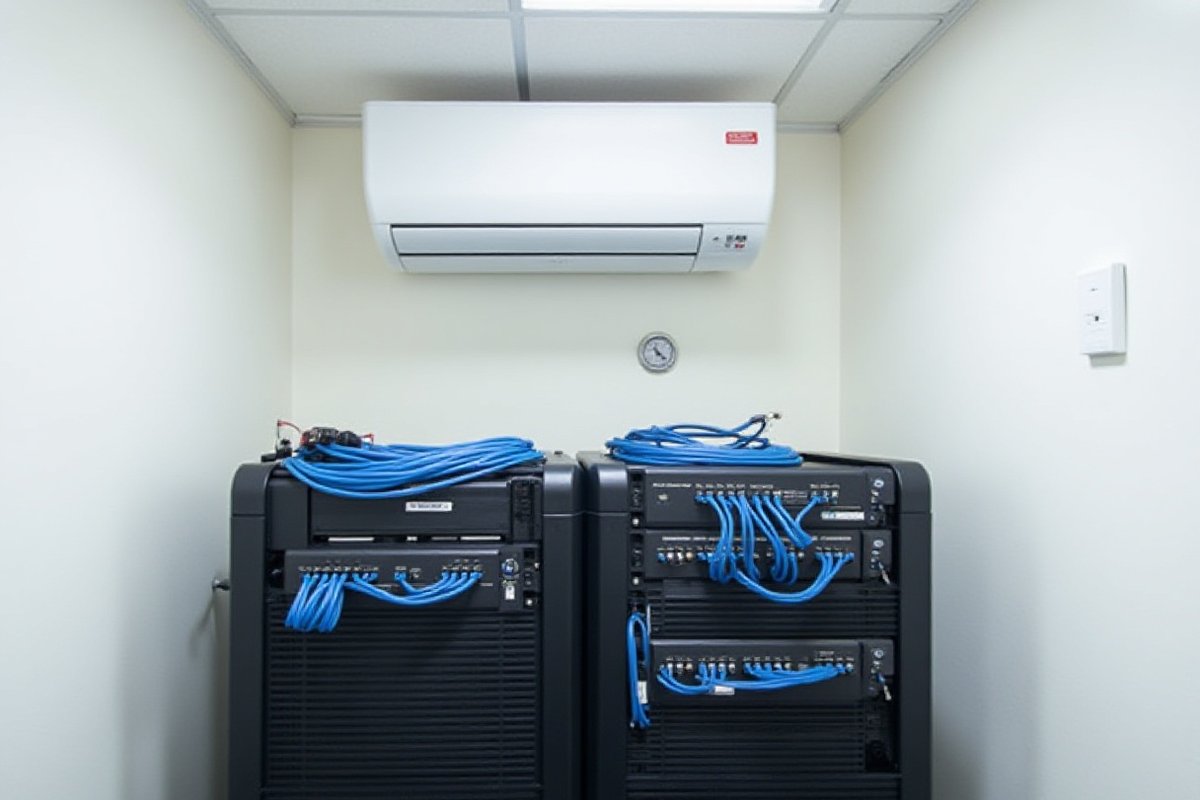
ASHRAE guidance for IT equipment recommends inlet air between about 64 and 81 degrees, so a closet does not need to be ice cold, but it does need cooling every hour of the year. A closet that relies on the building system loses cooling every night and weekend when the thermostat sets back. A dedicated ductless unit, with a high-temperature alarm, is the usual fix. Ask about redundancy if the equipment is critical.
Churches and other part-time buildings
A sanctuary that sits closed six days a week and then fills with people is hard on equipment. The system has to pull down heat and humidity from a closed building in a few hours, and a fault that started on Tuesday is only noticed on Sunday morning. Start cooling early enough before services, keep some humidity control running while the building is empty, and have the units checked before Easter and before the summer heat.
Offices, retail and medical suites
Here the complaint is usually one zone: the corner office that is always hot, the suite next to the glass storefront. That often comes down to a stuck damper, a thermostat in the wrong place, or a rooftop unit that was sized for a different tenant layout.
Licensing for commercial AC repair in Austin
Texas licenses air conditioning and refrigeration contractors through the Texas Department of Licensing and Regulation, and the license class matters more on commercial jobs than on houses. A Class B contractor may work on systems up to 25 tons of cooling and 1.5 million BTU per hour of heating. A Class A contractor has no size limit. One five-ton rooftop unit is well inside Class B, but a building with a 40-ton unit or a central plant needs a Class A contractor. License numbers begin with TACLA or TACLB, so the class is visible at a glance.
Anyone handling refrigerant also needs federal EPA Section 608 certification. Every company the line connects callers with holds an active TDLR contractor license, and you can confirm the number and class yourself.
Check any license yourself. Texas air conditioning and refrigeration contractors are licensed by the Texas Department of Licensing and Regulation. Ask for the license number and look it up at tdlr.texas.gov (opens in a new tab).
Refrigerant rules that now reach commercial owners
On January 1, 2026, EPA's Emissions Reduction and Reclamation rule under the AIM Act started requiring leak repair on appliances holding 15 pounds or more of an HFC refrigerant, such as R-410A, or of a substitute with a global warming potential above 53. For comfort cooling equipment, once the annual leak rate passes 10 percent the owner or operator generally has 30 days to complete a repair, and service records have to be kept. EPA excludes the residential and light-commercial air conditioning and heat pump category from these leak repair provisions, so most single rooftop units on a small building fall outside them. Larger comfort cooling systems, and commercial refrigeration such as walk-in coolers, can fall inside them.
Older equipment still running on R-22, an ozone-depleting refrigerant, remains under the long-standing Section 608 leak repair rules for appliances over 50 pounds. What matters for you: hire a company that knows which rules reach your equipment and keeps the records, because the obligation sits with the owner or operator.
Permits, ECAD and paperwork in Austin
- Mechanical permitsInside Austin city limits, replacing heating or cooling equipment needs a mechanical permit from the Development Services Department, and larger commercial projects can require plan review before work begins. Suburban cities run their own building departments. The contractor normally pulls the permit; confirm it is included in the price.
- ECAD energy benchmarkingCommercial buildings of 10,000 square feet or more, inside city limits and served by Austin Energy, must benchmark energy use in ENERGY STAR Portfolio Manager and report to the City by June 1 each year. Fines for not complying run from $500 to $2,000. HVAC condition shows up directly in that score.
- Utility rebatesAustin Energy offers commercial HVAC tune-up and replacement rebates through participating contractors. The tune-up rebate covers heat pumps, packaged and split units of 25 tons or smaller and needs pre-approval before work starts.
- Small Business BundleQualifying small businesses, nonprofits and houses of worship that combine three or more upgrades, such as an HVAC tune-up, LED lighting and smart thermostats, can get larger incentives. Austin Energy lists limits on locations and annual electric spend; check the current rules.
Owner and manager checklist before you call
Five minutes of preparation makes the first visit faster and the quote clearer. None of these steps involve opening equipment or going onto a roof without safe access.
- Which unit serves which space. If the rooftop units are not labeled, note which thermostat controls the problem area.
- What the thermostat shows. Mode, setpoint, schedule and whether it is in an occupied or unoccupied period. Many "broken AC" calls are a schedule that was never updated after a holiday.
- Breakers and disconnects. A tripped breaker can be reset once. If it trips again, leave it off for the technician.
- Filters and service history. When were filters last changed, and who serviced the units last? A maintenance log or old invoices help.
- Roof access. Where the hatch or ladder is, whether a key or escort is needed, and any landlord rules about roof work.
- Hours and urgency. When the business opens and closes, and whether there is product, food or IT equipment at risk.
- Lease terms. Many commercial leases make the tenant responsible for rooftop unit repair and maintenance. Check before approving a large job.
Have the unit, the space and your hours ready, then call. The company you are put through to will ask what it needs to know to send the right technician.
What a good commercial service visit includes
- A walk-through of the complaint. Which space, since when, and what the thermostat or building controls show.
- Airflow and filters checked first. On a rooftop unit that means belts, the blower, the filter rack and the economizer, since a stuck outside air damper can look exactly like a cooling failure.
- Electrical and refrigerant readings measured. Measured against the unit's data plate and the manufacturer's charging method, not estimated.
- Drains and roof penetrations. A clogged condensate line on a rooftop unit can mean a ceiling leak in the space below.
- A written report per unit. What failed, what is wearing out, the age of each unit from its data plate, and a price for the repair before anyone proceeds.
Maintenance contracts: questions to ask
A planned maintenance agreement is the main way businesses avoid emergency calls, but agreements vary widely. Before you sign, ask the company to put these answers in writing.
Worth having in writing
- The number of visits a year and the months they happen
- Exactly what each visit covers: filters, belts, coil cleaning, drains, electrical checks
- Whether parts, refrigerant and after-hours calls are included or billed separately
- A written report for each unit after every visit
- Proof of insurance and the TDLR license number and class
Reasons to slow down
- A long automatic renewal with no clear way out
- "Unlimited" service with no list of what is excluded
- Replacement recommended on the first visit with no repair price beside it
- No mention of who keeps refrigerant service records
- Unwilling to tell you which license class it holds
Repair or replace a rooftop unit?
A packaged rooftop unit is replaced as one piece, often with a crane, so the decision tends to be bigger than on a house. Age, refrigerant type, how many repairs it has needed and whether the new unit can sit on the existing roof curb all come into it. Federal rules now require new light-commercial equipment made from 2025 on to use a refrigerant with a global warming potential under 700, so a replacement unit may differ from the old one in more than size. Ask for the repair cost and the replacement cost side by side, and ask whether an Austin Energy rebate applies before the order is placed. The AC installation page covers replacement in more depth.
- Call any hourAn automated assistant answers (737) 378-9016 and asks whether it is about cooling or heating.
- Describe the problemGive your name, a callback number, your city or ZIP and what the system is doing.
- Get put throughThe call goes to an independent, locally owned HVAC company, which hears a short summary before it picks up.
- Deal with them directlyThat company diagnoses, quotes, does the work and is paid by you. If it cannot answer, it gets your details to call back.
How this line works: Austin AC Service is a free phone line, not an HVAC company. It does not repair, install, quote or schedule work and holds no license. Calls are transferred to independent, locally owned HVAC companies that hold Texas air conditioning and refrigeration contractor licenses. Those companies may pay Austin AC Service a referral fee. You never pay the line. How it works.
Related services
Emergency AC and Heating Repair
No cooling in a 100-degree week or no heat in a freeze. What counts as an emergency, what is safe to check first, and when to leave the house.
HVAC Maintenance and Tune-Ups
A spring cooling check before the heat and a fall heating check before the first freeze, and what a real tune-up includes.
Air Duct Cleaning
When duct cleaning is worth paying for, what the EPA and NADCA say, and how to spot a too-good-to-be-true offer.
Commercial calls across the Austin area
The line takes calls for businesses in Austin and the surrounding cities. Permit offices and electric utilities differ from one city to the next, which each area page explains.
- All Austin-area service areas
- South Austin
- Round Rock
- Cedar Park
- Pflugerville
- Georgetown
- Leander
- Kyle
- Hutto
- Buda
- Lakeway
- Manor
- Dripping Springs
Rebate details for businesses served by Austin Energy are in the Austin Energy rebates guide.