

Emergency AC repair in Austin, TX is mostly about two kinds of weather: summer afternoons when the house heats up faster than anyone expects, and the handful of winter nights each year when the temperature drops hard and the heat stops. This page helps you decide what truly cannot wait, keep everyone safe until help arrives, and know what to ask when you call at 2 a.m.
Austin AC Service is a free phone line, not an HVAC company. An automated assistant answers (737) 378-9016 around the clock, sorts the call into cooling or heating, records who you are, where you are and what has gone wrong, then connects you with an independent local HVAC company working in your area. That company decides when it can come out, diagnoses the problem, quotes the repair and is paid by you.
Is it an emergency? A quick way to decide
Start in the left column. If anything there matches, deal with it first, before calling anyone about the equipment. The middle column is a genuine after-hours call. The right column can almost always wait for regular hours without risk.
Call 911 or the utility first
- You smell gas (rotten egg odor) anywhere in the house
- A carbon monoxide alarm is sounding, or several people feel sick, dizzy or headachy at once
- Smoke, sparks or flame from any part of the system
- Someone in a hot house is confused, faint or not sweating
- Downed power lines near the outdoor unit after a storm
Call the line now, day or night
- No cooling and the afternoon is heading past 100 degrees, especially with a vulnerable person at home
- No heat with a forecast low near or below freezing
- Water pouring from an attic unit or through a ceiling
- A burning or hot electrical smell that stopped when you shut the system off
- A breaker for the system that trips again after one reset
- A heat pump stuck on emergency heat in a hard freeze
Usually fine until business hours
- The system cools but cannot hold the setting on the hottest afternoon
- One room is warmer than the rest
- A new rattle or squeal while the system still cools or heats
- A higher than usual electric bill
- Planning a tune-up or a replacement quote
A useful rule: the danger comes from the people and the house, not the equipment. A broken AC in an empty, shaded home on an 88-degree night can wait. The same breakdown with a newborn or an 85-year-old in an upstairs bedroom in August cannot.
When no cooling becomes a health problem
Heat is the Austin weather hazard that sends the most people to the emergency room. Austin Public Health tracks heat-related illness visits at area emergency departments from May through October. KXAN reported 880 such visits in 2026 by the end of August, compared with 657 for all of 2025 and 937 in 2024. Heat exhaustion accounts for the most visits each year.
A house without air conditioning in that heat does not cool off at night the way people expect. Brick, roof decking and attic insulation soak up the afternoon sun and keep releasing it after dark, so a second-floor bedroom can stay well into the 80s at midnight. The CDC notes that once temperatures reach the high 90s, an electric fan may make you feel better but will not prevent heat-related illness. Moving air that is hotter than your skin just adds heat.
Know the warning signs
The CDC lists heat exhaustion symptoms as heavy sweating, headache, nausea, dizziness, weakness, thirst and irritability. Heat stroke is the medical emergency: confusion or slurred speech, fainting, seizures, very high body temperature, and skin that may be hot and dry or still drenched in sweat. Heat stroke needs 911, not a fan and a glass of water.
The people most at risk are older adults, babies and young children, anyone pregnant, people with heart, lung or kidney conditions, and people taking medications that affect how the body handles heat. Pets in a closed house are at risk too.

Where to go while you wait
The City of Austin and Travis County open cooling centers through the summer. Austin Public Library branches and Austin Parks and Recreation centers can serve as cooling centers during their normal hours, and some extend their hours during extreme heat. Locations and hours change, so check AustinTexas.gov/alerts before you leave, and Capital Metro has offered free rides to cooling centers. A relative's house, a shopping center or a movie theater works just as well for a few hours. The point is to get vulnerable people out of the heat while the HVAC company works on the problem.
Gas smell or carbon monoxide alarm: leave first
These two situations come before any equipment question. They are rare, but they are the reason an HVAC breakdown can ever be life-threatening.
- Gas smell. Natural gas has an added odor like rotten eggs. Do not flip switches, use the thermostat, start a car in an attached garage or light anything. Get everyone out, then call 911 and Texas Gas Service at 1-800-959-5325 from outside, or the propane supplier if your home uses propane.
- Carbon monoxide alarm. CO has no smell or color. The CDC lists headache, dizziness, weakness, upset stomach, vomiting, chest pain and confusion as the common symptoms, often mistaken for the flu. If the alarm sounds, get everyone into fresh air and call 911. A sleeping person can be overcome before noticing anything.
- No improvised heat. Never heat a home with a gas oven, a grill, a camp stove or a generator. The CDC says to run a generator outdoors, more than 20 feet from windows, doors and vents, and never in a garage, even with the door open.
When the heat goes out in a freeze
Austin does not freeze often, which is exactly why a no-heat night catches people unprepared. During Winter Storm Uri in February 2021, Camp Mabry stayed below freezing for 144 consecutive hours and dropped to 6 degrees. Two years later, the ice storm of January 31 to February 2, 2023 left more than 170,000 Austin Energy customers without power at its peak, many of them for days. In both events the house itself became the emergency.
If the system quits on a freezing night, keep the heat you have. Close off rooms you are not using, gather everyone in one interior room, hang blankets over windows and drafty doors, and dress in layers including a hat. Open the cabinet doors under sinks on outside walls and let a faucet drip to protect the pipes. If you use an electric space heater, the National Fire Protection Association says to keep it at least three feet from anything that can burn and to plug it straight into a wall outlet, never a power strip or extension cord.
When overnight lows at Camp Mabry are forecast to reach 35 degrees or below, the City of Austin activates cold weather shelters, with information at AustinTexas.gov/alerts or the cold weather shelter hotline at 512-972-5055.
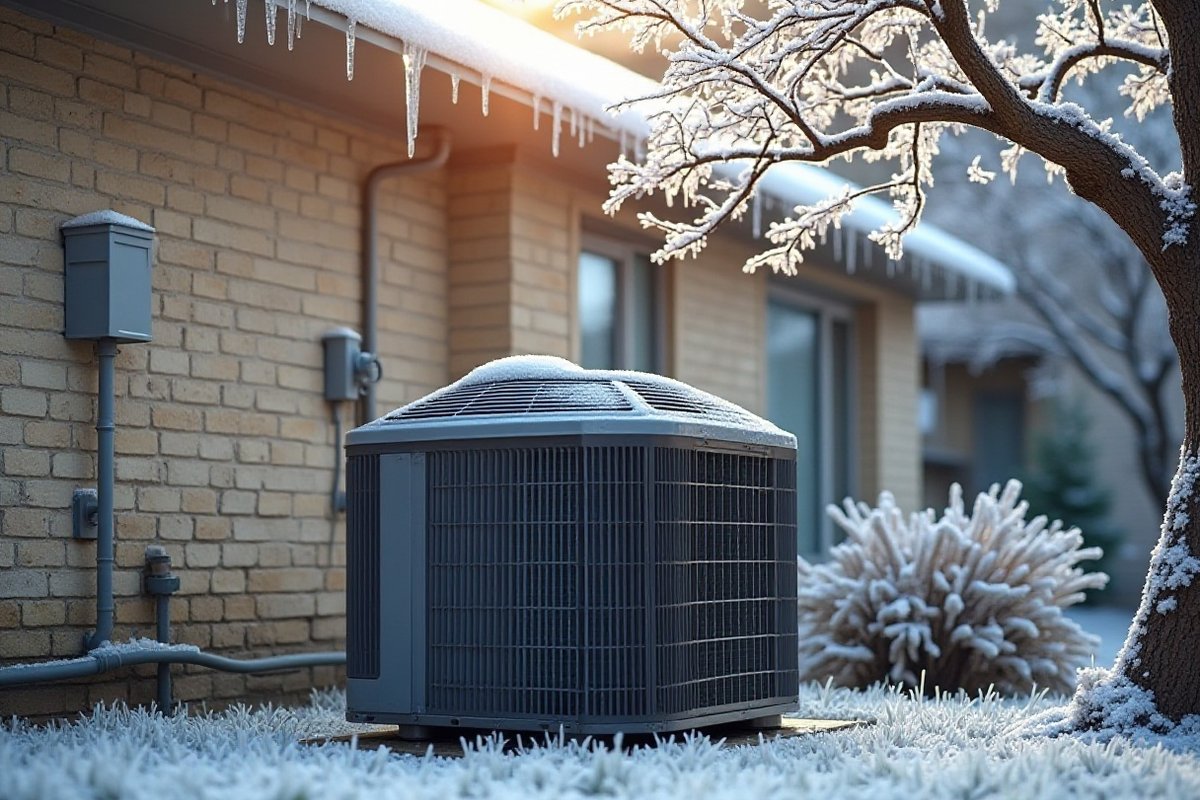
One heating case looks like an emergency but often is not: a heat pump that is steaming, with its outdoor fan stopped for a few minutes, is usually in its normal defrost cycle. The heating repair page explains defrost, auxiliary heat and the Emergency Heat setting in detail.
Power outages and grid alerts are a different problem
If the whole house is dark, no HVAC company can help until power is back. Check whether it is your system or the grid before you call anyone.
Is the power out?
If lights and outlets are dead too, it is an outage. Austin Energy customers can check the outage map at austinenergy.com, text OUT to 287846, or call 512-322-9100. Many suburbs are served by other utilities such as Pedernales Electric Cooperative, Oncor or Bluebonnet Electric Cooperative, so use the number on your own bill.
When power returns, set the thermostat to Off for a few minutes, then back on, so the system does not restart into a brownout. If it still will not run, check the breaker once, then call.
What ERCOT alerts mean
ERCOT, which runs most of the Texas grid, posts Texas Advisory and Notification System (TXANS) updates when demand may run high. A conservation appeal asks people to cut use voluntarily if they can do so safely. Only at Energy Emergency Alert level 3 can ERCOT order rotating outages, which Austin Energy says typically last up to 40 minutes per area before rotating.
Never let a conservation request put a vulnerable person at risk. Raising the thermostat a few degrees is the ask, not turning cooling off.
Two checks worth two minutes before an emergency call
A technician at midnight is expensive, so rule out the simple causes first. Neither check involves opening the equipment.
- Thermostat and breaker. Confirm the thermostat is on Cool or Heat with the right setting and has a working display. Look for a tripped breaker labeled for the air handler, furnace or condenser and reset it once. If it trips again, leave it off.
- Drain safety switch. Many attic and closet units have a float switch that shuts the system off when the drain pan fills. If you see water in the pan, the system may have stopped itself on purpose. Turn it off, put a bucket or towels under any drip, and call. Do not keep resetting it.
Leave everything else to the technician: no panels off, no wiring, nothing involving refrigerant or the gas valve. Those are trained, licensed jobs for good reason.
Still down after those two checks? Call at any hour and describe exactly what you see and who is in the house. The company you are put through to uses that to judge how urgent the visit is.
What an after-hours call actually involves
When you call (737) 378-9016 at night, the automated assistant takes your details and transfers you to a local HVAC company. If that company picks up, you speak with it directly. If it does not, your information goes to it for a call back. The line itself never promises an arrival time, because it does not control anyone's schedule.
Ask the company four things on that first call: when someone can realistically be there, what the trip or diagnostic fee is at this hour, whether its technician can carry common parts, and what to do in the meantime. During a citywide heat wave or freeze, companies triage too. A home with an infant and no cooling may be seen before a home that is merely warm.
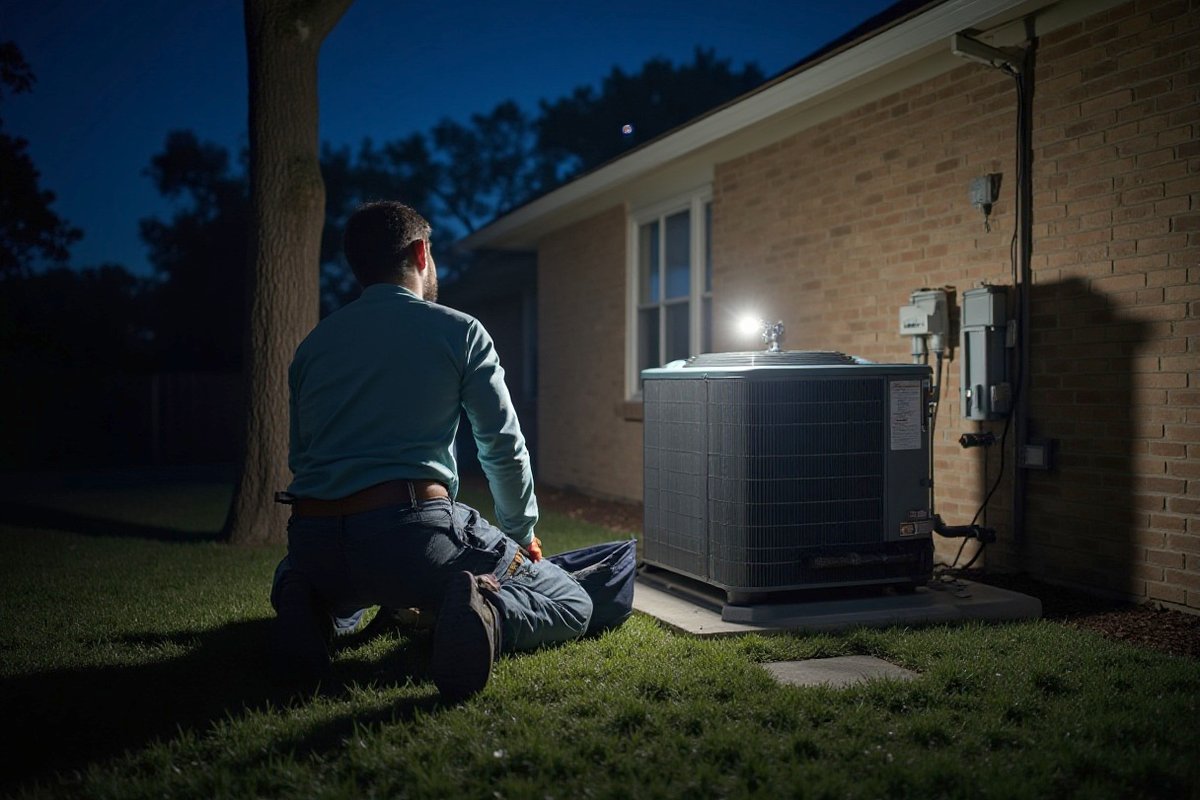
What a good technician does on an urgent visit
- Makes it safe first: confirms there is no gas leak or electrical hazard before working on anything else
- Finds the actual failed part with meters and gauges rather than guessing or swapping parts until something works
- Tells you the price before the repair, in writing or on a phone or tablet, and whether the diagnostic fee is credited toward it
- Offers a temporary fix when the right part is not on the truck at 1 a.m., and explains what the permanent repair will be
- Does not pressure you into a full replacement in the middle of the night. If replacement is genuinely on the table, a quote can wait until daylight
For what the common AC failures are and what they cost to put right, see AC repair. For furnaces and heat pumps, see heating repair.
Before the next emergency
Spring and fall checks
Most emergency calls are a worn part that failed under the first big load of the season. A spring cooling check and a fall heating check catch weak capacitors, clogged drains and dirty burners while companies have time. See HVAC maintenance.
Working CO alarms
In any home with gas heat, a gas water heater or an attached garage, the NFPA recommends CO alarms on every level and outside each sleeping area. Test them monthly and replace them by the date on the back.
A plan for the vulnerable
Decide now where an older parent or a new baby would go if the AC quit in August or the heat failed in February, and save this number in your phone so nobody has to search for it.
- Call any hourAn automated assistant answers (737) 378-9016 and asks whether it is about cooling or heating.
- Describe the problemGive your name, a callback number, your city or ZIP and what the system is doing.
- Get put throughThe call goes to an independent, locally owned HVAC company, which hears a short summary before it picks up.
- Deal with them directlyThat company diagnoses, quotes, does the work and is paid by you. If it cannot answer, it gets your details to call back.
How this line works: Austin AC Service is a free phone line, not an HVAC company. It does not repair, install, quote or schedule work and holds no license. Calls are transferred to independent, locally owned HVAC companies that hold Texas air conditioning and refrigeration contractor licenses. Those companies may pay Austin AC Service a referral fee. You never pay the line. How it works.
Check any license yourself. Texas air conditioning and refrigeration contractors are licensed by the Texas Department of Licensing and Regulation. Ask for the license number and look it up at tdlr.texas.gov (opens in a new tab).
Related services
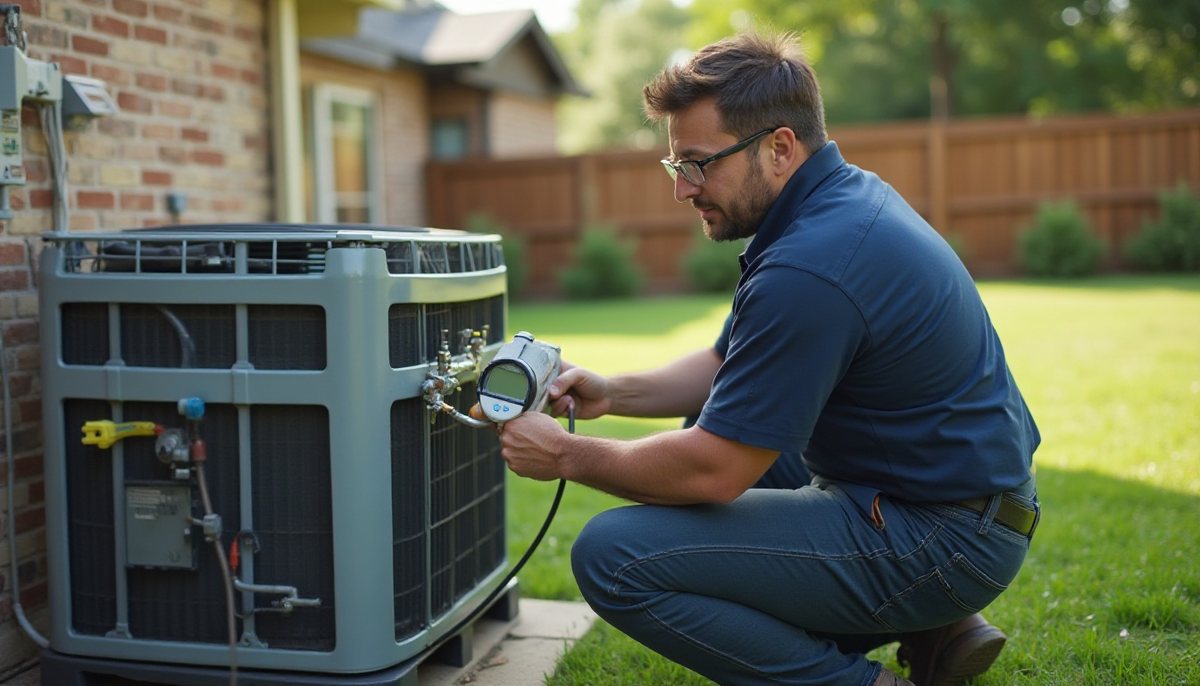
AC Repair
Warm air, a unit that hums but will not start, ice on the lines or water in the ceiling. What a proper diagnosis covers and what to ask before a repair.
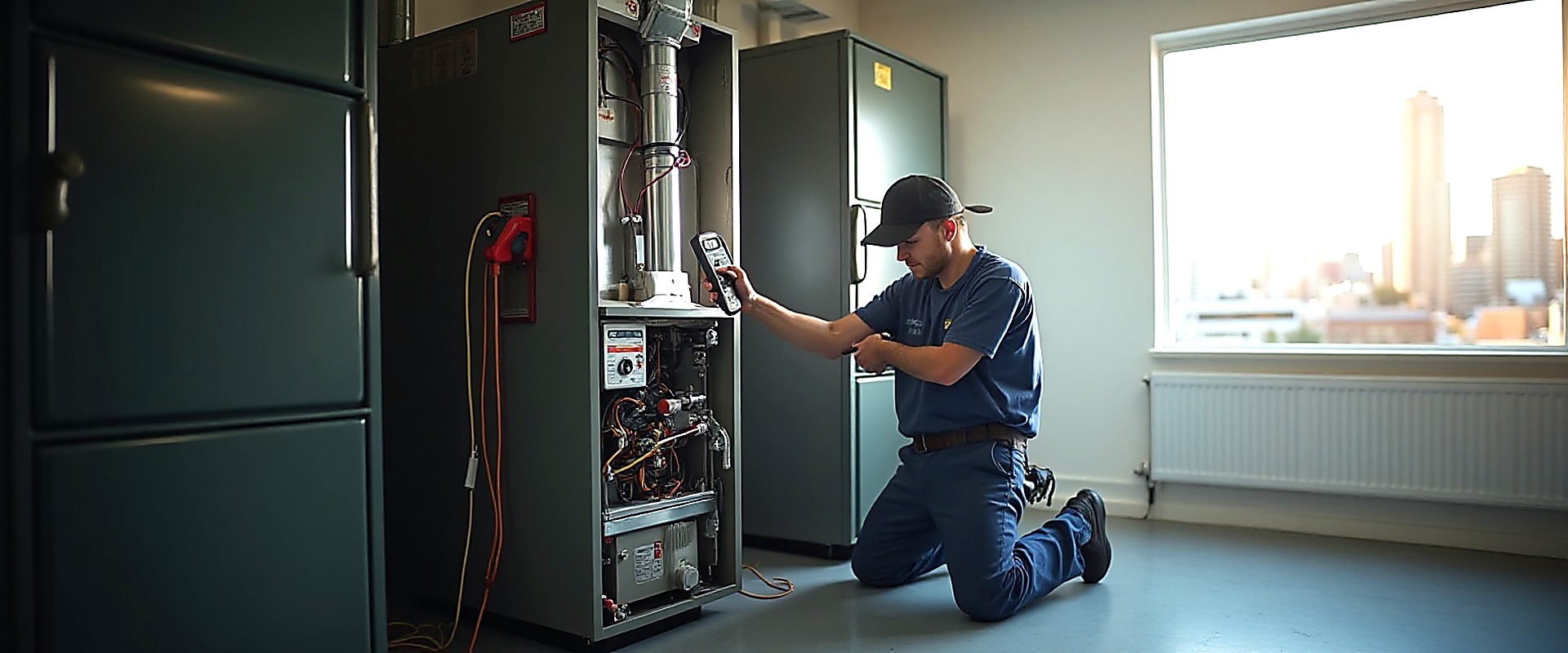
Heating and Furnace Repair
Gas furnaces, heat pumps and emergency heat. Why Austin heating systems fail on the first cold night and what a good technician checks.
HVAC Maintenance and Tune-Ups
A spring cooling check before the heat and a fall heating check before the first freeze, and what a real tune-up includes.
Emergency calls across the Austin area
Night or day, holiday or not, the line takes calls from Austin itself and from the suburbs listed below.